For three years, I published a blog post every single week. Eventually, I needed a break, so I shifted to writing only when inspiration struck. Yesterday, that inspiration hit like a thunderbolt. A recent event in the horse community sparked such an outpouring of commentary that I couldn’t resist taking a closer look. I found myself especially interested in the sheer volume of negative reactions from keyboard warriors. As I thought about how to frame this post, the title “The Hypercritical Horse Community” immediately came to mind.
However, as soon as that title occurred to me, I wondered if that was too harsh. Was I overreacting? What does everyone do these days if they want the answer to a question–any question? They go to Google, of course. To my total surprise, this is what popped up in Google:
The equestrian world is widely notorious for being a “hypercritical community”. Because horseback riding involves large, live animals and significant risks, opinions heavily clash regarding training methods, riding styles, and horse care. Navigating this culture often requires a thick skin and a reliable support system.
Navigating the scrutiny and drama in the horse world requires shifting your focus and setting healthy boundaries. Understanding why the community is so intense and learning how to protect your peace can make a world of difference.
The Google response elaborated on the reasons why this community can be so difficult. I will address that later…
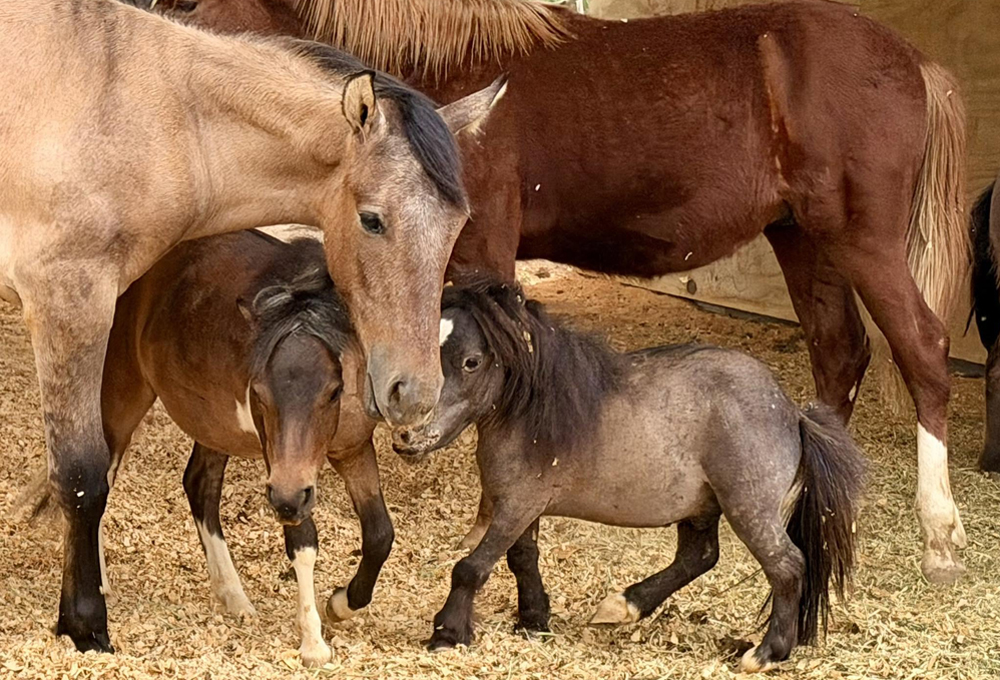
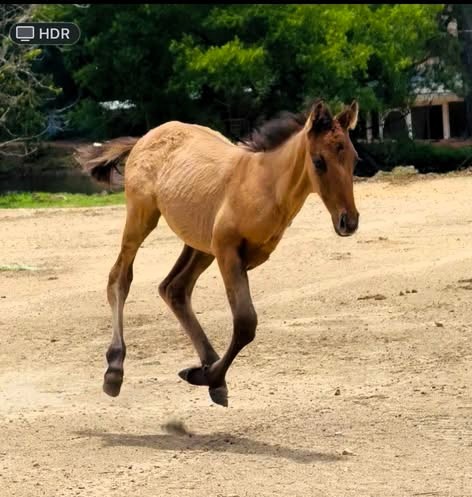
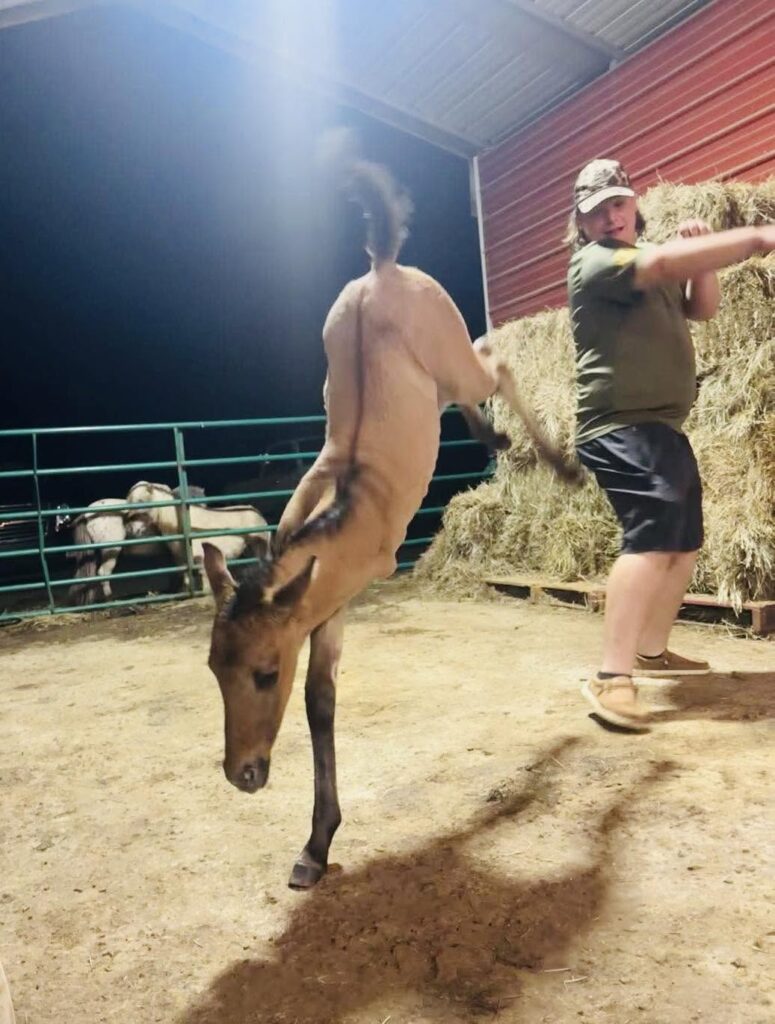
Rocky, the colt who drew intense public attention
If you have any connection at all to the online horse community, you’ve probably heard about Rocky—the three‑legged Quarter Horse who lived in Mississippi at Rocking R Ranch and Rescue. Rocky was born without his left front leg.
About a week ago, he crossed the Rainbow Bridge, surrounded by his devoted equine companions and the humans who had cared for him with extraordinary dedication during his 15 months on this Earth.
That last sentence alone may already have some readers fuming: “the humans who lovingly cared for him.” My post, my perspective. And my right to hold that perspective is exactly what fuels my passion for writing this article.
When Jennifer Guilbert Aylesworth brought Rocky home to her rescue farm 15 months ago, she immediately faced intense backlash from keyboard warriors who were convinced they knew better. It didn’t matter that Jennifer had a stellar team of professionals evaluating Rocky on a regular basis. It didn’t matter that she posted videos showing those professionals discussing their assessments of Rocky and his quality of life. Rocky’s own veterinarian even received hate mail simply for being involved. And that’s not to mention the abuse directed at Jennifer and her staff.
I engaged in some of those early online discussions. I clearly remember one exchange with a self‑appointed critic from those early days. The overwhelming attitude among the naysayers was that no horse could survive for any meaningful length of time on three legs. Rather than consider Rocky as an individual case, those who were certain they knew better insisted he should be euthanized immediately.
In one of my responses to this line of thinking, I talked about my husband’s daughter, who was born with multiple limb deficiencies. Needless to say, there was a great deal of worry and concern about her quality of life and what she would or wouldn’t be able to do. That daughter is now in her 30s, holds a college degree, and assists families in making life plans for their autistic children. Imagine assuming, from the start, that she couldn’t live a productive, fulfilling life simply because of her disabilities.
Like many of you, I have followed Rocky’s story over this past year. What I saw was a colt who received an extraordinary amount of attention and medical care, along with an unlimited supply of love and compassion. I recently had a telephone conversation with Jennifer, who told me that Rocky saw the veterinarian once a week—except for a very brief period when his personal vet broke her leg. Over roughly 15 months, that adds up to more than 60 veterinary visits. How many of you own horses that have had that many appointments?
After the news broke that Rocky had crossed the Rainbow Bridge, I read a post from someone proclaiming, “OMG, finally. Rocky is finally at rest. This should have happened the moment he was born. Rocking R had so many misinformed. Rocky was not thriving and was in constant pain. So sorry to Rocky who had to suffer for so long. Rip Rocky. So glad you’re not suffering anymore.”
This woman—who appears to be in her early 30s—went on to criticize Rocking R Rescue and claim that Rocky was used as a fundraiser. Yet she has a “Subscribe now” link on her own Facebook page, where, for a mere $1 a month, followers can access her “exclusive content.” She lists no degrees, no professional background, and no credentials that would inspire anyone to pay for more of the same.
A veterinary technician responded: “As a vet assistant for over 18 years, I can tell you he was not showing signs of pain from the time he was born. Veterinarians know when an animal is in pain, not only through physical indicators and behavior, but also through specific pressure points that elicit a response. They also had a veterinarian on-site.
They allowed him to live and be a horse, and they laid him to rest before his size created serious problems. People need to stop with the witch hunts. He was loved, cared for, and set free when it was time. Stop with the dramatics and get off Google and TikTok for answers. Real-life experience is where the answers will be.”
I responded to the veterinary technician: “...As a veterinarian, I was totally on board with how they were managing this colt. The videos I saw did not show an animal in pain.”
What a Pandora’s Box that statement unleashed. My comment initiated a torrent of abuse from a gal I think is a veterinarian in the UK, but because her Facebook page is buttoned up like a vault, I can’t be sure. She apparently looked up my profile and responded, “You mean telavet? I don’t think they did wrong initially as when he was very young and light weight he did appear to not struggle too much. But the inevitable happened and it did go on too long. He was very clearly struggling, even in the very short clips they showed, around Christmas time. If you could not see the struggle I would recommend attending some CPD and refreshing your training.”
So, in one fell swoop, she diagnosed Rocky from across the pond and bashed my credentials and veterinary telehealth, all at the same time. She went on to say, “Some of us must maintain the standard of practice as well as the oaths we took when we swore in at graduation. I’ll say a pray(er) tonight for the animals under your care. Hopefully your (you’re) not so lacking in other areas/species as you seem to be in this.”
She ended her tirade by adamantly insisting that he was in pain. Perhaps, in his final weeks, he wasn’t 100% comfortable. I wake up every morning unable to stand up straight until my back loosens. My seven‑year‑old Border Collie has a pinched cervical nerve; he hasn’t been walking with me lately, and he’s on a cocktail of medications. Does that mean we should both pack it in immediately?
The Final Decision
As of the time of this writing, Jennifer had not yet shared publicly what factors led to the much‑discussed decision. However, she did share them with me. After Rocky turned one year old, they began filming his leg every three months instead of every six. Rocky didn’t use his front leg the way a typical horse would; he had learned to shift some of his weight onto his hind end, using his front leg primarily for balance—his “cane.” Jennifer told me that during the most recent filming, they noticed changes that made it clear it was time.
There was no catastrophic injury. Nothing happened. We repeated X‑rays routinely just to be sure, because he was very driven and very stoic, and we wanted to make sure there wasn’t something going on that we couldn’t see. The growth plate on the inside of his front leg had closed, but the one on the outside had not. The outside would keep growing while the inside wouldn’t, and that would continue to make his leg bow. There was nothing we could do to stop it, and he had no opposing limb to counterbalance it. So we made the decision to let him go before it became an issue.
When Opinion Outweighs Expertise
What I really struggle to understand is why so many people are so willing to assume they know better than the professionals and horse owners who are actually assessing a situation in person. It’s a given that people will have differing opinions about how any situation should be handled. But if it isn’t your horse or your circumstance, why is there such a need to force your opinion onto someone else?
If you’re genuinely worried about animal abuse, are you out rescuing the starving dogs, cats, and horses found in every county across the United States? Those are the animals who are truly suffering. Put some of that misplaced passion toward something that will do real good rather than harm.
Don’t consult Dr. Google and then attack someone hundreds or thousands of miles away over a situation where you likely don’t know all the facts—and that is, frankly, none of your business.
One of the many things Jennifer and I discussed was our individual capacities for tolerating pain or discomfort in our animals. From what Jennifer said, Rocky’s vet, Dr. Longoria, has a similar intolerance for intense or unnecessary suffering. Jennifer shared this conversation with me:
The other day, when I apologized to her, she told me, “Don’t you dare.” She said, “We did right by him.” And I told her, “I know, but I’m sorry your name has had to be dragged through all of this.”
She said, “I will never regret the decisions we made. Don’t apologize to me. You didn’t sway my decisions. I made them based on Rocky—how he was doing and what was best for him.”
And she knows that I know I could never talk her into letting me allow something to suffer for money, or views, or donations. She would never agree to that. Honestly, I don’t know any vets who would. I’ve never come across one. Maybe there are some out there, but that’s what everyone keeps saying—that we’re just paying our vet to say these things.
Personally, I have a very low tolerance for allowing my animals to suffer pain. Of course I’d love to make their lives completely pain‑free. I’d love it if Jake didn’t have an alternating dropped‑shoulder lameness that keeps him from walking with me. I haven’t yet figured out how to explain to him why he can’t go. But some discomfort, some inconvenience, and some adaptation to disabilities are an inevitable part of life.
I have no doubt that Dr. Langoria made every decision with Rocky’s best interests at heart. For these hostile detractors to attack her, send her hate mail, and question her ethics is incomprehensible to me.
Jennifer did tell me that, thankfully, her supporters outnumber her detractors. Even knowing that, it was hard not to suffer under the weight of the criticism.
We got him on a Sunday, and by the next Monday I was almost suicidal from reading all the negative things being said about me because I had decided to let him live. It has been the most mentally challenging year or fifteen months of my life. I had to dig deep and stay firm in my conviction not to let those comments influence my decisions for him, because it would have been much easier to euthanize him and avoid all of that. But it wouldn’t have been the right thing for him.
I had to plant my feet in the sand, talk to God a lot, and lean on my husband. He kept reminding me who I was, that what people were saying wasn’t true, and that they didn’t know my heart.
People don’t realize how comments like that can push someone over the edge. If I hadn’t had the support system I do, it probably would have.
Google’s explanation for our hypercritical community
As I asked at the beginning, why do we have to be so mean? Why does Google immediately affirm that the horse community is hypercritical? And it isn’t just the Rocky story where this shows up. How many of us belong to Facebook groups and see posts that begin with, “Please don’t be mean!”
I recently saw a post from a young woman, perhaps in her late teens, asking for advice on how to start a GoFundMe so she could get a horse. Talk to any social worker, and they’ll tell you that an adolescent’s brain isn’t fully mature until around age 25. Can we all agree that this young woman might need to reevaluate whether this is the right time in her life to take on a horse? Some respondents were kind but firm, much like a parent guiding a child. Others were downright brutal.
It appears that our society has devolved to the point where compassion, empathy, and understanding are no longer valued by many. Combine that with the belief that one’s own way is the only way, and dialogue quickly becomes hostile.
I truly was surprised to get this result when I Googled “hypercritical horse community.” This was Google’s explanation for this sad state of affairs…
Why Equestrians Are So Critical
High Stakes & Welfare: Because horses are massive, sensitive animals, safety and ethics are major points of contention. What some view as judgmental nitpicking, many consider to be morally justified corrections to protect horse welfare. [1, 2, 3, 4, 5]
The “Right Way” Mentality: Riding is a complex, decades-long learning process. Traditions run deep, and practitioners of different disciplines (e.g., Dressage vs. Western, Natural Horsemanship vs. traditional training) often clash over the “correct” way to do things. [1, 2]
Tribalism and Online Forums: Equestrians tend to hold strong opinions, and social media or forums often amplify “calling out” others rather than offering constructive feedback. [1, 2, 3]
How to Protect Your Peace
Find a Safe Haven: Seek out supportive, non-judgmental barns or clubs. Many equestrians agree that surrounding yourself with a positive “team” of trainers and peers is critical to enjoying the sport. []
Focus on the “Journey”: Perfection is an illusion in riding. Instead of fixating on faults or comparing your progress to others, celebrate small milestones with your equine partner. [1]
Prioritize Evidence-Based Knowledge: Educate yourself using science-backed resources. Grounding your practices in research helps filter out baseless opinions from keyboard warriors. Organizations like Equitopia Center focus on equine welfare and can help you navigate differing opinions. [1, 2]
Practice Self-Compassion: If you are dealing with burnout or anxiety, resources like Gray Horse Counseling offer mental health strategies for equestrians to let go of judgment. [1]
With great love comes great grief
One of the most poignant parts of my conversation with Jennifer was listening to her describe Rocky’s passing and the reactions of his equine friends. I have witnessed enough euthanasias to agree with Jennifer’s and Dr. Langoria’s assessment of how an animal responds to the euthanasia solution. When an animal is sick or debilitated, it takes very little euthanasia solution to send them peacefully over the bridge.
Rocky didn’t go easily. He was healthy and vigorous in so many ways. He wasn’t necessarily ready to go.
And as for his equine friends? I’ll let Jennifer tell you in her own words.
Corey, bless her heart, was devastated. It was awful. She tried to go into the hole with him, to jump in after him. I had to contain her and put her in a stall because she was thrashing. Once I got her in there, the way she reacted… I’ve never been so heartbroken.
I’ve been prepared to let Rocky go since day one. This has always been a day‑by‑day situation for me, knowing it could change at any moment. But I wanted him to be okay for them, because they loved him so much. I was prepared. I loved him every day knowing it might be our last. They didn’t know that, and they were just heartbroken.
That’s what hurt me the most—their little hearts breaking. Mine will be okay. Mine is meant to break over and over; that’s what it has learned to do. But theirs wasn’t. That was the hardest part.
We love those babies. They were all orphans together, and they made their own little family. It was a real lesson, if anyone ever wanted to understand horses’ emotions, their ability to form families and friendships and bonds. They are sentient beings.
Can we learn something from our animals and choose to be more loving and compassionate toward one another? Can we stop assuming that everyone should make the same decisions we might make? Can we simply agree to disagree? We all love our animals. We all do the best we can with what we know at the time. Be supportive, not mean. Put your outrage to use in real situations of abuse.
86 thoughts on “The Hostile Hypercritical Horse Community”
Annette
Very well stated. Bless you for sharing your (very accurate, in my opinion) perspective and Jen’s own statements. Rocky was blessed with more than a year of quality life, excellent care, and more love than many experience in a much longer lifespan.
You people have nothing but my respect And gratitude for giving all your horses unconditional
Love and help. People are so
Mean now- don’t know why but hold your head up
Because you have always done the right thing for the animals, people, and yourself. I’m so sorry they made you suffer for no apparent reason. I don’t know what crabby people have lived through to make them so righteous and demanding and disrespectful. Please know that you have done all you could in the name of love. I’m sorry I asked why because I loved that horse too. Thanknyou for answering! And for being who you are!
I totally agree. I’m just happy I was able to witness this phenomenon. I loved every update, every photo, and I encouraged him to kick, jump and sneak treats. I figure if this is something we may never see this again in our lifetime, send love, light & good energy their way. It reaffirms that with God absolutely anything is possible.
Thank you so much for this wonderful insightful article. Every situation is and SHOULD be handled on an individual basis, as was Rocky’s. Jen and Veterinarian’s lived with and loved Rocky every day. They know what he needed and if and when he was in pain. They made the right decision in his case. As his one front leg started to grow and the one growth plate fused, and as his leg continued to bow. He would have been in pain increasing by the day. So in this situation, the right decision was made. Thank you for your insight and understanding. Sending love.
Thank you for taking the time to write this article. I completely agree with you. I watched the life of Rocky. Even from a computer screen, I grew attached to the life and love that he exhibited. I almost always mourned that the day would come too soon for him and I wished it wasn’t so. It was never my place to decide whether he should live or not and that burden was not my load to carry. To assume things you do not know to be a fact is to judge. We all have been taught “Judge not, Lest thee be judged”! Each and every one of us will have our judgement day. Some things we could have avoided altogether if we would just heed this command.
Thank you for writing this. I, too followed Rocky’s story & wondered about his ability to do many things. I dont know Jennifer personally, but i have been following her page for some time & have been impressed with her sense of caring, her complete devotion to all of the animals she has the care of. NO ONE has the right to criticize her, she put it ALL on her page!! She didn’t hide the fact that she was always considering Rocky’s health, his ability to manage his body’s short comings. I also was appalled at the terrible criticisms she endured! She did the right thing! I would have done the same! Blessings to all of you that are involved!👍👏👏👏👏👏🙏🙏🙏🙏❤️❤️❤️❤️❤️❤️
I totally agree and couldn’t of said it better myself but I want to add that Rocky’s will to live and survive was so high even in death he still fought to live💔💔 god bless him RIP little man Rocky, so glad you had 15 month of love and friends you ran with, love you 🥰
Maybe if everyone really had been taught “judge not,” they wouldn’t be so crabby. In the Southern US, we are more in the majority than in many regions for learning about our Lord.
God’s Peace to Jennifer, Drs. Thomas and Longoria, and to all who work at RRR and who loved sweet Rocky. He came for a reason, and everyone gets to choose their reactions. Be light, or be darkness.
Thank you so much for this . I have followed Rocky since day one and know without a doubt Mrs Jennifer did right by him. My heart breaks for her and Rocky’s little herd. He may be gone but he will never be forgotten .
Jennifer….thank you for sharing this. Dr. Thomas…thank you for writing this. I have loved Rocky’s story…which includes every human caregiver that has touched him…both in person and spiritually since the very beginning. I am disgusted with all of the negativity some humans possess. Just rude and ignorant. God gave Rocky to the world out of love and to show LOVE. He has brightened so many of my days for sure. He and all of his little friends. And now all of our hearts are left a bit tender by his passing…yet still full of all he gave to the us.
Thank you so much for writing this. I have loved and followed Rocky since day 1. My heart is broken for Jen and Joy….. I will miss seeing what Rocky is up too, but I will continue to support Jenn and Joy with all the new horses that I know they will be saving!
Someone needs to write a childrens book about Rocky. Living life to the fullest with a disability. I don’t know how you would end the book in a happy manner for kids.
A beautiful thought, yet it might be hard on very young ones. I believe all our beloveds wait for us and in perfect health and complete understanding they will escort us on our first tours of Paradise. Did you see the wonderful movie, “Inside Out?” That explained loss really well.
Thank you for the explanation of why, I never doubted it was a great reason! Jenn always promised he would be let go before he had pain and she followed through..so many hugs and tears for Corey…. I feel it too honey. Thank you for loving him for all of us.
I would like to believe that naysayers genuinely had Rocky’s best interests at heart and did not want a horse to suffer. Of course we should call out animal abuse if we see it. But when a rescue is as transparent and open about their animal’s care, and when concern turns to death threats and vitriol, especially in the face of facts regarding the animal’s wellbeing, it’s clear that it was never about compassion for the horse. While it’s true that any online watcher — neither at the farm in person or inside Rocky’s mind — can ever know what he was truly feeling, the people best able to make that judgment were clearly doing so on a daily basis. (Every video I ever saw, he looked happy and healthy.) This horse was so clearly loved, cared for, and vetted constantly.
Your point about asking people who are celebrating the grief of this rescue and this community what they are doing to end animal suffering is a great one, too.
Thank you so much for this! Rocky was amazing. He was healthy and energetic and mischievous as well. I live probably 100-150 miles away on the MS coast and wish I could’ve come to see him. Jen and Dr L did the right thing definitely. Also, Dr L was even getting phone calls and threats.
If Rocky could have spoken he would have said “thank you Mom for believing in me and letting me live. I enjoyed playing with my friends and love you all so much!”
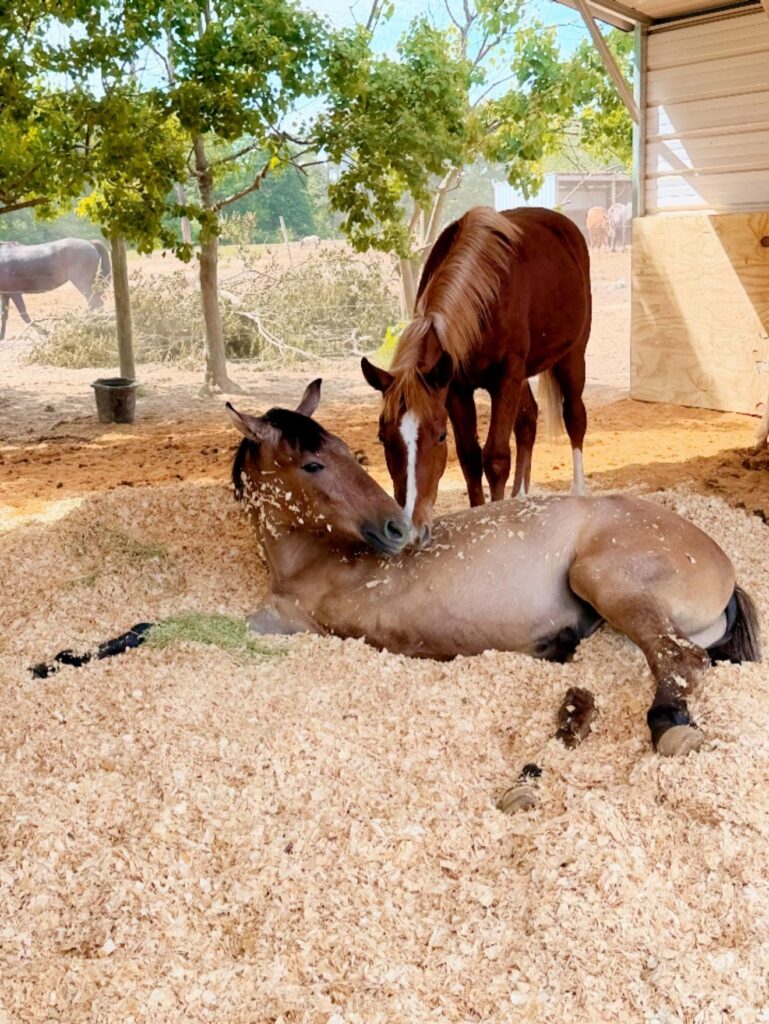
I hope little Cori is ok now, precious girl. The horse standing over him in first pic is Inferno..who actually belonged to someone else and was at their ranch temporarily but since Rocky was such good friends with him, that was his birthday present. Inferno got to stay there indefinitely!
God bless Jen and everyone there at the ranch and also Dr L.🙏🙏🙏
Thank you for this forthright and balanced article.
I first heard about Rocky when he was a few days old and a post just popped up on my feed.
I didn’t make any comments, just started following RRRR and read about all the other ‘no hopers’ they rescued and continue to do. I was reassured about the rescue and their ethos.
I’m in the UK so would love to know who the ‘vet’ expert over here was, as I am disappointed that anyone in the profession could be so unprofessional and misinformed.
RRRR made it clear from the start that Rocky’s life was not likely to be long, that they didn’t know how he would manage on his three legs, but as long as he wasn’t in pain he was welcome to all the love care and compassion they give to all of their rescues, plus perhaps a little bit more.
Why was that not enough for those who actually seemed to want him to be in pain, they wanted him to be suffering?
There is enough neglect abuse and cruelty going on all the time in every country in the world, which goes unnoticed and unchallenged because horses suffer in silence. They don’t whimper whine or cry, they just get on with it.
It’s them who need the indignation and outrage.
People can be so damned cruel to others, and in these days where social media allows them to be so anonymously there should be some redress. They get attention and therefore reward from their actions – how can that be right?
Thank you for writing this article. Anyone who has been following Rocky from the beginning knows that every word you’ve written is truth. Rocky could not have had a better life and been loved and cared for anymore than he was. I pray that Jennifer takes heart in the middle of her grief and knows without a doubt that she is loved and respected for the stand she has taken. The only one(s) who has/have experienced pain during Rocky’s 15 months of life are Jennifer, the caregivers, and medical staff, knowing that each day could be Rocky’s last. He was monitored for health and well-being that closely. Back off, keyboard warriors, you are not welcome here!
I’ve followed Rocky’s story since I first saw the posts with him running around and bucking on one leg – I couldn’t believe how full of life he was! He was obviously happy and very well cared for, and I could see how much attention Jennifer gave to his well-being. I realised he would only have a short life, but he was given the chance to be a normal young horse for as long as he was comfortable – as any animal should be allowed to do. I knew Jennifer had his best interest at heart, and how ever much it hurt, she would let him go when the time was right. Thank you for giving him his chance Jennifer.
Thank you for writing this I have watched Rocky from the beginning and loved to watch what he would try and succeed doing it, bless his little group. I have his shirt and love it he will never be forgotten.
Thank you for your very educated and thought out words. I, like many others, around the world have watched the glorious adventures and unfailing love life of Rocky. We all knew that there may be a day we would all have to say our own goodbyes to this mighty warrior horse. I for one was not ready…I have cried and mourned for days now. But my heart is with Jennifer, her team and all Rockys best friends. I am sending virtual hugs and many prayers for comfort for the days and months that come. Each day that comes after this will be a testament of the valiant efforts and love that gave Rocky and each of Rocking R’s babies a fighting chance at a normal life.
Rocky will live forever in many of our hearts and his memory and the stories will never fade away. Thank you for All you do.
Well done perfectly said. Unfortunately ‘horsey people’ are very nasty & toxic, I am not a ‘horsey person’ I am a ‘horse lover’ & believe me the difference is night & day. I feel for Jen & all involved this is a very sad situation made 100 times worse by vile acid tongued people. I sincerely hope Jen gets the time & peace she needs to grieve gorgeous Rocky.X
How many times have we seen her go to an auction, find a horse who is suffering and purchasing it, knowing she was going to help it by putting it to sleep. This doesn’t seem like profit or advertisement to me. She loves those horses and don’t want any to suffer. I feel if she had the money and could she would purchase them all. She helps those she can and goes home with a broken heart for those she is unable to help. Let me say, Thank you Jen and Crew for all you do. You do a great job, God pointed you in the right direction. Keep up the Good work don’t let anyone come between you and the work you and the crew do.
What a beautifully, compassionate, kind written post.
Thank you so much for putting all those thoughts into words.
I followed Rocky and his beautiful life with Jennifer and I totally understand how and why she did what she did. She is commendable for her care, dedication and love, not only to Rocky but Miracle and all her beautiful family.
I have my own vegan animal sanctuary in the UK and people judge me about who should live and die, yet they know nothing. They haven’t done the 4 weeks with no sleep, they haven’t gone without food for months just so you can feed the animals. They are not homeless like I am so my animal family has a safe permanent home. They haven’t prayed on everything you believe in and have just to let someone live one more day just incase they recover, just incase the vet got it wrong. They haven’t gotten so brokenhearted they’ve had a heart attack!!
People should never judge someone that they have never been in the mind or body of, the total devastation or desperation they have felt, the difficult decisions they must make.
Dear Jennifer, the decision to let Rocky go, I sit heart with tears, what a brave, incredible lady.
To have allowed Rocky to have 15 months of an incredible, happy, exciting life was worth it for him, and he was the one that it was all about.
The haters, there will always be haters, but those people, put them in her shoes and they’d crumble.
God bless you and keep you safe Rocky, may your life be as fulfilling in your next journey.
God bless you Jennifer, love from the UK XXXXXXX
Thank you for this❤️🩹
I love watching Rocky and watching you live him. I can’t imagine having to make the decision you had to make. And I can’t imagine having to watch your other babies hearts break. I pray the Holy Spirit brings you and your other babies great comfort. I believe this isn’t then end for Rocky but the beginning for him to run free in heaven on 4 legs. You all will see him again one day. Love you.
Thank you for the well written article. I have utmost respect for Jen and Joy and everyone involved in their rescues. I cannot imagine how difficult the decision was for all concerned to let Rocky go and be free. It takes a very strong and dedicated person to handle all that they do. I am heartbroken but it was explained from the beginning. I have personally dealt with people that spew evil words, it’s horrible. Be kind even if you disagree. Be strong and do what you all do best. Sincerely and from the heart of- God bless each of you.
Thank you for posting this and writing this article. I have followed Rocky from day one and I was one that knew there would be a day that he wouldn’t be here anymore. But I left that up to the professionals Jenifer, the doctors, the vets and anybody else that took care of him and loved him. I just hoping that he would have as well long as possible to be with Us. But I think that all concern made the right choice at the right time. I checked him. They watched him and everything that they’ve done for him. They kept up on his progression and I knew what he was starting to go in pain. I knew when this day come, they would not let that happen that they would make the right choice for him. I’m just so sad that we lost a loving delightful coat that was amazing in his life. And he drew the attentions of millions of people. Thank you so much. I truly enjoyed the writing of this.
thank you for writing this. we are all heart broken at the rage directed towards Jenn, Dr L and the rescue. a while back someone even suggested Dr L wasn’t even a real vet. 🤦♀️ i really wonder sometimes if people remove their brains when near a keyboard. Rocky was a nurturer and live a life full of love, adventure and calculated shenanigans. as should we all!
When I was a very young girl I developed a passion for horses. There were a couple of barns and paddocks close to me and over time I got to know and love every single horse in my area. But what I could never figure out was why the women who ran the barns were so condescending and mean. I now live in a similar place and one of my neighbors who is a horse woman is similar in that same kind of way which I still find so off-putting, unpleasant and controlling, It was so bad that even as a young girl I had to think twice about the wisdom of joining that community which sadly was never really going to be an issue because hell could freeze over before my parents bought me a horse. Of course, one could wonder if it was these womens’ reaction to something in me but others had a similar experience of them and mostly they were generally disliked. I suspect that to some degree it is the elitism surrounding horse ownership, coupled with competition that keeps some of these women on edge, that coupled with something missing in our family lives that drives many of us to find consolation in the sensitive company of horses. That was certainly a factor for me. I do not claim that this is in any way true across the board with all women involved with horses but in my now 70 years on this planet it is not a theme I have found to be uncommon. As for me, I am one of Jennifer’s avid supporters and the most heartbreaking and yet massively uplifting aspect of this situation has been her courage and tenacity in favor of this one little creature who had the misfortune of experiencing a glitch in utero but she felt strongly should not be deprived of what life was available to him before suffering put its finger on the scale. Sadly I am aware of some others in the rescue world, not just horses, who have found themselves staring at the abyss of self emulation because of the evil viciousness of these types of attacks. In one case with which I am familiar the self harm ended in a tragic death. Fortunately in others the individuals were pulled back from the brink by close family and community. I don’t normally attempt to shame others but in these cases… As for your writing, thank you so very much for adding your articulate and reasoned voice to this drama. Sadly I am not confident it will sway many of the cruel naysayers, but if it bolsters the hearts of the rest of us, and helps to strengthen our hearts against the abusiveness, then you have made a meaningful difference with your words and I suspect that last is very true. ❤
I have followed Rockin R for a very long time. I trust that Jen and Joy always make the right decision. If you are not there and work in it daily how can you say anything. It seems there will always be haters no matter what you do. I hate that Dr L went thru the crap she did. That should have never happened to her. She has been a great vet for the rescue as far as I can tell. Jen being a nurse I feel like she has the ability to make these decision. I’m a nurse and I can make these type of decisions. When you deal with pain and death in humans I think you have a great understanding of it. People need to stop being so hateful to others and try to get along.
Thank you for this great article!!
Thank you for your kind article.
I am another who followed Rocky’s story, and saw the genuine love and care he received from Jenn and her folks. My heart broke for her and the rest of Rocky’s family. I can’t imagine what it must have been like to realize the time had come to let him go! … and then to care for his grieving friends as well 💔😢
I hope your article leads at least one potentially hyper critic to rethink before posting.
Bravo to all of you who had to courage to do what you did for Rocky. Not many of us could have done so. To critical “keyboarders”. Bog off. If you don’t have anything positive to offer, keep it to yourself. Or maybe take the time and effort to go visit RRR and see just what they do for horses that others abandon for whatever reason. I takes guts, a huge amount of time and money to take on these responsibilities that others just toss off to others. Thank you to all who loved and cared for little Rocky and gave him a chance for a happiness that he would have been robbed of. He had quality not quantity of life despite his physical deformity. He wasn’t perfect but he was special. Loved and followed him from the start. Thank you all.
Thank you. I am heartbroken as well. After finding a story about a horse that had lived for several years, 20 or 30, on only 3 legs, one front leg, like Rocky, shortly after seeing Rocky’s rescue, I was so excited to believe he could too.
You all did the very best anyone could and so much more than almost anyone would, to give him the chance. You gave him life, love, and pure joy for as long as possible. My heart is breaking for all of you 😥 Run free Rocky. Run free.
☮️ 🩷 🌟
Thank you for putting this article out there I agree with you 100%. These people that make these harsh critical judgments I would be safe to say that at least half of them do not have horses. And I will say to the veterinarians out there, what are you doing to help ease animal suffering? Are you giving a whole day free of charge for spaying and neutering and maybe shots like distemper tell people that have animals and can’t afford it? Have you gotten together with other people and started a no-kill shelter for dogs and cats that have no place to go? So until you do these things and give up the mighty Dollar you have no right to say anything. To anybody else that’s not a veterinarian how many times do you go out and find stray animals that are starving and fill them a little shelter and make sure they have food and water? I’ve done it many times, you have no right to judge anyone until you’ve been in that place. We have no time for you people like us that are going out and helping making sure that animals out there that are abandoned or starving at least have food and water. There’s one organization that takes PVC pipes and makes them into fill stations where they can put dry dog food and they make sure that these animals have access to fresh water everyday. Even though they aren’t able to house them at least they take care of them. So God bless anyone that’s doing what they can to help animals and to the rest of you who do nothing but open your mouth and say negative things please go away there’s enough negativity out there and there’s a few of us that are trying to change that. We will miss you Rocky you sweet precious baby I’m glad that we got to see the beautiful pictures of you while you were still here 💔😔
I stand firmly in support of the rescue team that gave Rocky a chance at life. The decision to support his journey was rooted in deep compassion and a commitment to animal welfare- it had nothing to do with raising funds. While some critics and naysayers immediately dismissed his chances, choosing judgment over empathy, the rescue team did the right thing and chose love. They refused to give up on a living being based on a diagnosis alone, choosing instead to evaluate Rocky’s spirit, comfort, and will to live day by day. Because of this dedication, Rocky did not spend his final months in neglect or discarded by the world. Instead, he experienced a brief but incredibly rich life filled with abundant love, green pastures, soft bedding, and the gentlest human touch. You could see from the videos – He knew what it meant to be cherished, safe, and fought for—a dignity that every animal deserves. The rescue team always promised to let Rocky guide the way. When recent X-rays ultimately revealed that he would not be able to continue his path comfortably, the team made the most agonizing, selfless decision a caretaker can make. They chose to let him go peacefully, putting his comfort above their own desires to keep him here. To the critics who chose to condemn these efforts: compassion is never a waste of time, resources, or heart. Providing a sanctuary for a animal to experience love, even briefly, is the very definition of rescue work. I praise the rescue organization for their unwavering bravery, their fierce advocacy, and the profound kindness they showed Rocky. They gave him a beautiful life, and a dignified goodbye. Thank you for showing us all what true unconditional love looks like. I appreciate all of you. God Bless.
Well, Snowman was only fit for dog food. Needed to be put out of misery, right? Anecdotal true stories abound. But I believe the primary source of hypercritic spewing is EGO. The Across the Pond commentary with “I will pray for you tonight” remark is just one example. It’s about superiority and flexing. Her prayers are between her and God. The announcement was a type of crowdsourcing. “I’ve got God’s ear”. Okay, but do you know His opinion or have His attitude? Decidedly, NO!
Maybe since Rocky did not go easily is why his sweet little friends were so upset. I agree with the idea that if they are sick and disabled, they go a lot easier. My wonderful heart dog ruptured a disc in her neck and surgery was out of the question so I let her go. She went very, very peacefully.
I was so in love with Rocky. I can only imagine how difficult it was to let him go. But you loved him, so you did what was best for him. Ignore the naysayers and know that you did the right thing by him every single day. What a joy he was. Thank you for loving him and for allowing us the privilege of loving him as well. His life will be remembered long after it ended. God speed to our little angel. He is whole now.
Thank you for this article, and thank you Jen for letting Rocky live a happy life for as long as he could. I have followed him since the beginning, and his posts always brightened my day. I will miss him, but now he’s running free and unencumbered, and eventually his friends, and all of us, will see him again someday. Keep running free Rocky❤️
I’m old now and I’ve had a life filled with horses. The joy, love and teaching I received from all of them is so bountiful. Each of their times to leave this earth were heart rending and still bring my tears but what they brought me in life outweighs the hard partings. Thus was Rocky’s story. He knew love here and he WILL be most loved in heaven. Revelation 5 verse 13 speaks of animals and more being around God’s throne. Just think how happy he is now. We will all get the chance to see him again someday.
Thank you for saying what really needed to be said. Unfortunately I don’t think the ones who need to read it the most will. Your empathy and love for what Jen and her group does was very apparent and that’s lovely to see in this world of negativity. I often comment online in answer to someone’s comment “was that necessary and was that kind”. Because I feel like that is what we have lost today. Common courtesy and kindness. Just common politeness. Would you walk up to someone you had never met on a street and say that kind of thing to their face. Unfortunately, today, alot of people would. And isn’t that sad. The internet has allowed us the freedom to say terrible hurtful things without the retribution of seeing the expression on someone’s face when they read/hear it. I think you should have to see first hand the pain you caused. Just to give you a minute moment of feeling “there now, I’m right”. No matter the havoc you might have caused to get your little “high”. So thank you for putting it all out there. I know we all knew from the very beginning that Jen would do right by Rocky, let him have a terrific few months of life, and not a minute of pain, and she did just what she said she would do. No matter how much pain that gave her. She is a doing the fight for abused animals that so many critical no-it-alls talk about but don’t do anything about. So thank you to Jen too. We love you for the work you and your group do. But the people who NEED to read this article the MOST won’t because those kind dont admit they are wrong. But I hope maybe a few will read it and understand how their words have hurt and try to change. Or at least start to think about what they are doing. That would be a start.
Thank you for supporting Jennifer, I follow her page because anyone can see the devotion, dedication, compassion and love she puts into her rescue of horses, she does amazing work. One cannot imagine the heartbreak she suffers when she has to make painful decisions like the one she recently made with Rocky. She gave him a year and a half of living a life filled with great care, kindness and compassion, a life he would not have experienced had she listened to critics and naysayer and not her heart. I am always grateful for the Jennifer’s of this world, what would our world be without people like her❤️
A beautifully balanced & well written article, it needed to be said & thank you for doing so in this way. Rocky had an amazing heart from I could see, from the sheer amount of other hearts he’s touched – so does Jen & nit all circumstances are the same. But also as you said, it’s no ones business – and to be so hateful as to drive someone down so far is something each of those haters should take a good look at themselves for. Sadly, social media has bred a kind of people that think their opinion is more important than anyone else no matter how well qualified – I hope this article will help put that to bed, but I doubt it. That kind of ego & hate doesn’t like to be reasoned with in my experience.
Well done Jen & the Rocking R team – you did right by that wonderful boy, you know it, he knew it & those of that can reason facts know it too xx
An outstanding article on the amazing love and strength supporting a most wonderous soul in a disabled colt. So glad Rocky got the opportunity to experience life. What a blessing and what an incredibly strong heart to care for another being to live his best life. Truly a story told from Rocky’s perspective (like Black Beauty) would become a classic and inspiration for animal lovers and generations to come.
Thank you for this, it opened my mind up. I didn’t agree with keeping Rocky alive, for some reason I couldn’t get my head around it. If I commented I tried to do it with compassion, my heart was breaking for him. I also understood, why the owner wanted to do everything to save him, I would too. You’re right though I didn’t know the full story and I certainly pricked my ears/eyes up when the owner said she was suicidal from the comments. No-one has the right to make anyone feel like that, not even me and I apologise if my comments did that. RIP Rocky, you were loved and cared for. This article has helped me see the whole story. Thank you.❤️
THANK YOU for having an open enough mind to learn and form a different opinion. The people who THINK they know better are not the ones doing the day-in, day-out caring for traumatized or abandoned animals. Professionals in all areas of equine care, as well as seasoned and compassionate horse people, surrounded Rocky and made real-life, in-person decisions about his care.
Pauline, Im so glad you feel differently now. It is a sad situation, but Jen would never have let him suffer. She loved him to much. Thank you for loving him too.
We should never criticize others on the care of their animals, unless it’s neglect. Clearly, Rocky was loved and cherished. And very missed. I don’t agree with chemo on a dog with cancer or putting a dog in a wheelchair. However, I don’t disrespect the owners that choose that and I cheer them on hoping their dog comes through or are happy and healthy. To each his own. I think it’s high time people support each other, regardless of their decisions.
Thank you for saying exactly what I have thought and felt about Rocky and his loving dedicated carers. I am truly thankful that Rocky got to live his life. In some ways people might have thought it was too short and others too long. But it was just right for Rocky and his unique body and life. My wish would be that people learn from this that a life well lived is a life worth living 🐎❤️🐎
I was born with limb deficiencies myself, and I know that there is joy in life while living with a disability. So as long at Rocky could experience joy with his little herd, I cheered him on. But we are responsible for the animals we take care of, and it seems to be the right decision to let him go when it was clear that the way forward would be increasing pain and inability to move freely. Horses evolved to move, after all. You don’t have to believe in God to understand this. It is a responsibility that we have when we take on caring for animals even though it is difficult to let go.
Very well written, thoughtful and true post. I went through a journey with my OTTB when social media was still very much in its infancy. Mostly I had support and interest in his journey though even then there were those who were mean. I will never understand how anyone could have had the opinion that Rocky didn’t deserve his beautiful little life.
I understand being concerned, but people definitely take things too far.
I couldn’t agree more. I’ve been around horses for 60 years and have seen, heard and learned a whole lot of different opinions, methods and ideas. And while there’s always been some competitive jealousy stuff happening the internet has brought a whole new level of cruelness. It’s one thing to have a difference of opinion and another matter entirely to rant nonsense without one morsel of empathy. The mean girl syndrome. Apparently, these people either had mothers who were sorely lacking in empathy and so never taught them how to have grace and kindness, or they are just plain jealous of the accomplishments that Jen and her staff are able to do. There’s also a whole lot of gaslighting going on. Kind of like denying that J6th never happened. Telling people what they saw with their own eyes didn’t really happen. Those of us who really saw Rocky for what he was, pure love, could plainly see that he was coping just fine. Yes, we all understood that his life wouldn’t be a long one, but he deserved to try. He lived a whole lot longer than all the meanies thought he would and I loved that for him. His care was exemplary. No one else was willing to make that commitment to Rocky. The time, effort and cost of keeping him alive was a huge commitment. It would’ve been so much easier to just put him down, right? And many rescues would have done exactly that. Because they wouldn’t care enough to put in the effort, the money and the time. Kill that one and on to the next, heh? They can just sit down and be quiet. Let the real rescues step up and do the hard right thing because they believe all life deserves a chance. So, the mean girls should just be quiet and go take care of their own lives and let those who are willing (like Jen) to fight the hard battles for those animal’s lives that are going to be complicated. Rocky brought love to many, and I’ll be damned if any of the mean girls will dull that one bright star that we all loved named Rocky.
This whole article is just emotional manipulation trying to disguise a lack of logic. You cannot compare a 1,000-pound prey animal, which carries 60% of its weight on its front end, to a human with a disability or a dog with a pinched nerve. Biologically, a horse cannot use a wheelchair or live a non-weight-bearing lifestyle. Missing a front limb guarantees catastrophic mechanical failure.
The author of this actually shoots her own argument in the foot. Bragging that a young colt needed 60 vet visits in 15 months doesn’t prove he was thriving; it proves he required constant, extreme medical intervention just to survive his own body. She also contradicts herself, stating they had to euthanize him because his remaining leg was bowing and breaking down, only to turn around and say he was “healthy and vigorous” and “wasn’t ready to go” just to make the story more tragic. It cannot be both.
Instead of addressing the very valid ethical concerns about using a severely disabled animal for social media clout and fundraising, you attack the critics and use the owner’s tears as a smokescreen. True compassion in the horse world means putting the animal’s physical reality first, not prolonging their inevitable breakdown for internet views.
What is wrong with you Raleigh Link?? Have you no compassion at all? I don’t think so. Shame on you. At the very least you could have kept your negative thoughts to yourself. You are quite simply a very sad person in my opinion. For myself, I feel privileged to have been able to follow Rocky’s progress and indeed his happy life!
Absolutely nothing is wrong with her. She’s correct. My post almost word for word is in this article. Horses are not human. They need all four legs to thrive and even survive. He was alive for so long due to human selfishness.
FINALLY SOMEONE SAID IT!!! A horse’s anatomy is far different than a dog’s anatomy!! Dog’s are way lighter and their weight is far different dispersed on their legs. Even so, a three legged dog has a far higher chance of getting arthritis than a four legged dog! Scaling that up to a horse which is far larger AND walks on its toenails (whereas dogs walk on their toes) becoming a three legged horse is unviable. With that said I do NOT agree with the threats that were and still are being sent but people need to understand that disabilities affect individuals differently. A missing limb for a human isn not the same as one in a rabbit, a dog, a chimpanzee, a bird, and in a horse.
Have you no compassion at all? I don’t think so. Shame on you. At the very least you could have kept your negative thoughts to yourself. You are quite simply a very sad person in my opinion. For myself, I feel privileged to have been able to follow Rocky’s progress and indeed his happy life!
Thank you for your beautifully written post. I also loved Rocky and admired his progress. All of you who dedicated your time to care for and love Rocky are commended for your expertise. RIP beautiful Rocky.
At the end of the day nothing was really learned from keeping Rocky alive. Not that anyone has actually shared. I felt from the beginning and still do (I’ve been involved in many aspects of animal rescue for decades) that if this were REALLY about Rocky, they would never have posted this on social media. If this REALLY had nothing to do with attention then they would never have posted it on social media. Then I could have believed it was about Rocky. Not every rescue is an attention whore and this situation definitely gave that vibe. If this wasn’t all for attention then why put this on social media at all? There was no win here. It was nothing but a ticking clock all along. If you think to yourself “people got joy out of following his story” then you must seriously accept this was all for entertainment and attention. To support this means you would support this happening again. If we all learned a single thing from this, I think it’s that’s it never should have happened. If you can’t see the exploitation of Ricky I think your eyes are closed.
How do you know that nothing was learned? There were several equine professionals following this case and I would venture to say that they learned a lot about this individual circumstance. Unless you were there, you really don’t know what was done, what was learned, and beyond that it wasn’t your business because it wasn’t your horse.
Because there isnt anything to learn. A 3 legged horse can’t survive and live a proper life. That has been the case and will continue to be the case. Anything in regards to his 3 leggedness won’t bring any lessons that couldn’t have been learned from a healthy horse that isnt on a strict ticking clock.
Thank you for saying this!! If they were able to find an ethical way to keep Rocky alive, happy, and didn’t make it a stunt then I would be far less hesitant to judge and support. Horses cannot survive long let alone thrive with less than 4 limbs, which is very unfortunate, but it’s reality.
Why are Anonymous? Most everyone else has their name attached to the comments. And here is the problem with social media, you can say bombastic, ignorant, malicious, one sided things because you are unidentified. Unmask your self and the same to Raleigh so the rest of us know who you are and can Google you, harass you , etc. I’m tired of the nonsense! Rocky lived a full life and enjoyed every bit of it. If you can’t see this,then you must be blind or just a negative, vindictive person. Long live Rocky!!! RIP
I too, fell in love with Rocky. His spunky attitude and obvious zest for life was enchanting. It was also obvious that everyone involved in his care was totally devoted to allowing him to experience the best life he could for as long as he could. Letting him go must surely have taken every ounce of love and compassion from everyone. Having run a horse rescue for over 20 years and being faced with some extremely difficult decisions, I commend and sympathize with each decision made during his short but beautiful life. No one should feel or be shamed for his life. RIP Rocky. You will always be in the hearts of those who loved you.
Spot on. The live that Jennifer gave this precious horse should teach us ALL, even the heartless heathens suggesting he didn’t deserve to live at least a short life of joy,and example that sacrifice and love of a being is all GOD asks from us to be blessed beyond measure. Those who don’t get that are bereft of true selflessness, feeling or love. I learned so much from Jennifer through her sacrifice of time, money, love and eventually the heartbreak of letting go. Thank you for this article. Thank you, Jennifer, for all you did to give Rocky a chance at a precious life experience and a chance to live even a brief life with joy. What a fine example of every life deserves a chance!!
To those attacking the rescue:
Your negativity isn’t needed, wanted, or welcome here or the RRR pages. Rocky wasn’t a spectacle or a “profit center” — he was a soul who fought hard for every single day he got. The people who cared for him didn’t choose the easy path; they chose the compassionate one. They gave him safety, dignity, and love when others would have thrown him away.
If you can look at a three‑legged horse who inspired thousands and thousands and still twist his life into something ugly, that reflects on you, not on the rescue. Your harsh opinions don’t help animals, don’t honor Rocky, and don’t contribute anything meaningful. We don’t like them, and we don’t need them.
Rocky deserved kindness. He received it. And in the end, the rescue made the hardest, most selfless decision for his comfort — not for anyone’s gain.
And THAT is the majority!
To all of you self-righteous know it all “people”:
Yes, we are all entitled to our thoughts and opinions, free speech and all that. But to sit there on your pedestals at your keyboards and judge these people who work so hard on behalf of the forgotten ones and they use whatever tools they have to keep going and share with people how they work for them, just who do you think are you to to spew this rubbish, especially you so called “rescues” and “professionals”? Let me ask you something, how would you feel working hard at your your job or cause that you’re passionate about and you were jumped on and and trash-talked about them the same way as you’ve done to these awesome people who work their tails off to care for these sweet animals and be their advocates? I think you’d be feeling rather unhappy about it. I see so much of this nonsense on social media. Mind you, it’s not like I’m looking for it, it’s just out there and it’s ridiculous which is why I limit my time on it so I don’t have to see it when I read a post. My advice, don’t throw stones, one may bounce back. To rest of you out there, Kudos! you help me see that people do support their fellow humans in this world. I’m sure I’m going to get some nasty comments sent my way and I don’t care, my skin’s rather thick after all these years. As they say, sticks and stones and all that stuff. Oh, and Rocky was a character I got a kick out of; it didn’t matter that he was a tripod boy, he had the chance to live his best life. It’s what we all want for ourselves and those in our lives be it two legged or four legged.
Thank you for stating the obvious. This horse was loved from day one and her caretakers were hated by some from day one. People who do the least are the loudest. Your explanation explains a lot.
This article said exactly what i was thinking. Why cant we all have a little kindness, empathy and love in our hearts for those around us, whether human or critter? NO ONE can put yourself in someone else’s place and be in the position to have the knowledge to make the decisions they make. Rocky was one in a million, full of life, curiosity and love, and Bless everyone who helped to give him as much time on this Earth as possible. My mom always told me that it is not how much time you have on God’s green earth that counts, but what you do with that time. There is no doubt in my mind that Rocky’s time on Earth counted to the fullest extent. Perhaps more of us should spend less time complaining about others and follow Rockys example.
Thank you for this wonderful article about the selflessness of this amazing rescue. I was so sad to hear about Rocky, however was so happy that his caregivers did exactly what they said they were going to do when it was time. It is shocking to see the hate and vitriol being spewed at this amazing rescue, I will never support anyone that I see doing this. May they all have the day they deserve.
Dear Dr. Thomas;
I have to COMMEND you on your OUTSTANDING post(s) about kindness and understanding in the equine (and canine) rescue world… and support of Jennifer Guilbert Aylesworth’s EXCELLENT handling and care of Rocky, with the assistance of her veterinarians and staff!! Like thousands of other horse people, I have followed the case of this MOST AMAZING colt and his progress!! God “arranged” for Jennifer to rescue and give him this wonderful chance at life… to be an example for both people and animals (particularly the other rescue equines) about heart, determination, spirit, love and friendship!! I am also GREATLY SADDENED that he is gone… and I understand very well the GRIEF that Jennifer and all those closest to Rocky are feeling, but his life ended in a loving, caring, humane and peaceful way!!
My HOPE is that, someday, Jennifer finds the time to put his story and pictures in a book… and your entire article on the subject is an integral part of it. That book will be in my library until I am gone; then it will go to our great-granddaughter, who is quite the little horsewoman!!
As a keepsake of Rocky, after reading of his passing, I put together a document of what Jennifer wrote about it, along with 3 of my FAVORITE pictures of him… so I could hang it on the wall as a sort of memorial. When I came across and read your article, I saw that you had used the SAME 3 pictures in the beginning!! I absolutely LOVED the one with his little buddies… the one of him running… and my all-time favorite: bucking higher than a rodeo horse!! I hope that one makes the cover of The Story of Rocky… because it can be a wonderful inspiration to both adults and children with the loss of a limb or other handicap!! In the meantime, I now have another set of pictures and article of a most amazing young horse to grace my wall… and I will certainly share your articles!! THANK YOU!!!
Sincerely, Joyce Richie




Very well stated. Bless you for sharing your (very accurate, in my opinion) perspective and Jen’s own statements. Rocky was blessed with more than a year of quality life, excellent care, and more love than many experience in a much longer lifespan.
You people have nothing but my respect And gratitude for giving all your horses unconditional
Love and help. People are so
Mean now- don’t know why but hold your head up
Because you have always done the right thing for the animals, people, and yourself. I’m so sorry they made you suffer for no apparent reason. I don’t know what crabby people have lived through to make them so righteous and demanding and disrespectful. Please know that you have done all you could in the name of love. I’m sorry I asked why because I loved that horse too. Thanknyou for answering! And for being who you are!
I totally agree. I’m just happy I was able to witness this phenomenon. I loved every update, every photo, and I encouraged him to kick, jump and sneak treats. I figure if this is something we may never see this again in our lifetime, send love, light & good energy their way. It reaffirms that with God absolutely anything is possible.
I agree wholeheartedly 🙏
Thank you so much for this wonderful insightful article. Every situation is and SHOULD be handled on an individual basis, as was Rocky’s. Jen and Veterinarian’s lived with and loved Rocky every day. They know what he needed and if and when he was in pain. They made the right decision in his case. As his one front leg started to grow and the one growth plate fused, and as his leg continued to bow. He would have been in pain increasing by the day. So in this situation, the right decision was made. Thank you for your insight and understanding. Sending love.
Thank you for this.
This is great and needed to be said
I also agree with this post. I’ve had to have 5 horses euthanized and buried. I carry each one of them in my heart.
Thank you for taking the time to write this article. I completely agree with you. I watched the life of Rocky. Even from a computer screen, I grew attached to the life and love that he exhibited. I almost always mourned that the day would come too soon for him and I wished it wasn’t so. It was never my place to decide whether he should live or not and that burden was not my load to carry. To assume things you do not know to be a fact is to judge. We all have been taught “Judge not, Lest thee be judged”! Each and every one of us will have our judgement day. Some things we could have avoided altogether if we would just heed this command.
My thoughts exactly!!
Thank you for writing this. I, too followed Rocky’s story & wondered about his ability to do many things. I dont know Jennifer personally, but i have been following her page for some time & have been impressed with her sense of caring, her complete devotion to all of the animals she has the care of. NO ONE has the right to criticize her, she put it ALL on her page!! She didn’t hide the fact that she was always considering Rocky’s health, his ability to manage his body’s short comings. I also was appalled at the terrible criticisms she endured! She did the right thing! I would have done the same! Blessings to all of you that are involved!👍👏👏👏👏👏🙏🙏🙏🙏❤️❤️❤️❤️❤️❤️
I totally agree and couldn’t of said it better myself but I want to add that Rocky’s will to live and survive was so high even in death he still fought to live💔💔 god bless him RIP little man Rocky, so glad you had 15 month of love and friends you ran with, love you 🥰
Maybe if everyone really had been taught “judge not,” they wouldn’t be so crabby. In the Southern US, we are more in the majority than in many regions for learning about our Lord.
God’s Peace to Jennifer, Drs. Thomas and Longoria, and to all who work at RRR and who loved sweet Rocky. He came for a reason, and everyone gets to choose their reactions. Be light, or be darkness.
💜
Thank you so much for this . I have followed Rocky since day one and know without a doubt Mrs Jennifer did right by him. My heart breaks for her and Rocky’s little herd. He may be gone but he will never be forgotten .
Jennifer….thank you for sharing this. Dr. Thomas…thank you for writing this. I have loved Rocky’s story…which includes every human caregiver that has touched him…both in person and spiritually since the very beginning. I am disgusted with all of the negativity some humans possess. Just rude and ignorant. God gave Rocky to the world out of love and to show LOVE. He has brightened so many of my days for sure. He and all of his little friends. And now all of our hearts are left a bit tender by his passing…yet still full of all he gave to the us.
Thank you so much for writing this. I have loved and followed Rocky since day 1. My heart is broken for Jen and Joy….. I will miss seeing what Rocky is up too, but I will continue to support Jenn and Joy with all the new horses that I know they will be saving!
Someone needs to write a childrens book about Rocky. Living life to the fullest with a disability. I don’t know how you would end the book in a happy manner for kids.
A beautiful thought, yet it might be hard on very young ones. I believe all our beloveds wait for us and in perfect health and complete understanding they will escort us on our first tours of Paradise. Did you see the wonderful movie, “Inside Out?” That explained loss really well.
I agree, I have also seen a children’s book recently about the loss of a pet. So they are out there.
Thank you for the explanation of why, I never doubted it was a great reason! Jenn always promised he would be let go before he had pain and she followed through..so many hugs and tears for Corey…. I feel it too honey. Thank you for loving him for all of us.
I would like to believe that naysayers genuinely had Rocky’s best interests at heart and did not want a horse to suffer. Of course we should call out animal abuse if we see it. But when a rescue is as transparent and open about their animal’s care, and when concern turns to death threats and vitriol, especially in the face of facts regarding the animal’s wellbeing, it’s clear that it was never about compassion for the horse. While it’s true that any online watcher — neither at the farm in person or inside Rocky’s mind — can ever know what he was truly feeling, the people best able to make that judgment were clearly doing so on a daily basis. (Every video I ever saw, he looked happy and healthy.) This horse was so clearly loved, cared for, and vetted constantly.
Your point about asking people who are celebrating the grief of this rescue and this community what they are doing to end animal suffering is a great one, too.
Thank you so much for this! Rocky was amazing. He was healthy and energetic and mischievous as well. I live probably 100-150 miles away on the MS coast and wish I could’ve come to see him. Jen and Dr L did the right thing definitely. Also, Dr L was even getting phone calls and threats.
If Rocky could have spoken he would have said “thank you Mom for believing in me and letting me live. I enjoyed playing with my friends and love you all so much!”
I hope little Cori is ok now, precious girl. The horse standing over him in first pic is Inferno..who actually belonged to someone else and was at their ranch temporarily but since Rocky was such good friends with him, that was his birthday present. Inferno got to stay there indefinitely!
God bless Jen and everyone there at the ranch and also Dr L.🙏🙏🙏
Thank you for this forthright and balanced article.
I first heard about Rocky when he was a few days old and a post just popped up on my feed.
I didn’t make any comments, just started following RRRR and read about all the other ‘no hopers’ they rescued and continue to do. I was reassured about the rescue and their ethos.
I’m in the UK so would love to know who the ‘vet’ expert over here was, as I am disappointed that anyone in the profession could be so unprofessional and misinformed.
RRRR made it clear from the start that Rocky’s life was not likely to be long, that they didn’t know how he would manage on his three legs, but as long as he wasn’t in pain he was welcome to all the love care and compassion they give to all of their rescues, plus perhaps a little bit more.
Why was that not enough for those who actually seemed to want him to be in pain, they wanted him to be suffering?
There is enough neglect abuse and cruelty going on all the time in every country in the world, which goes unnoticed and unchallenged because horses suffer in silence. They don’t whimper whine or cry, they just get on with it.
It’s them who need the indignation and outrage.
People can be so damned cruel to others, and in these days where social media allows them to be so anonymously there should be some redress. They get attention and therefore reward from their actions – how can that be right?
Thank you for writing this article. Anyone who has been following Rocky from the beginning knows that every word you’ve written is truth. Rocky could not have had a better life and been loved and cared for anymore than he was. I pray that Jennifer takes heart in the middle of her grief and knows without a doubt that she is loved and respected for the stand she has taken. The only one(s) who has/have experienced pain during Rocky’s 15 months of life are Jennifer, the caregivers, and medical staff, knowing that each day could be Rocky’s last. He was monitored for health and well-being that closely. Back off, keyboard warriors, you are not welcome here!
I’ve followed Rocky’s story since I first saw the posts with him running around and bucking on one leg – I couldn’t believe how full of life he was! He was obviously happy and very well cared for, and I could see how much attention Jennifer gave to his well-being. I realised he would only have a short life, but he was given the chance to be a normal young horse for as long as he was comfortable – as any animal should be allowed to do. I knew Jennifer had his best interest at heart, and how ever much it hurt, she would let him go when the time was right. Thank you for giving him his chance Jennifer.
Thank you for writing this I have watched Rocky from the beginning and loved to watch what he would try and succeed doing it, bless his little group. I have his shirt and love it he will never be forgotten.
Thank you for your very educated and thought out words. I, like many others, around the world have watched the glorious adventures and unfailing love life of Rocky. We all knew that there may be a day we would all have to say our own goodbyes to this mighty warrior horse. I for one was not ready…I have cried and mourned for days now. But my heart is with Jennifer, her team and all Rockys best friends. I am sending virtual hugs and many prayers for comfort for the days and months that come. Each day that comes after this will be a testament of the valiant efforts and love that gave Rocky and each of Rocking R’s babies a fighting chance at a normal life.
Rocky will live forever in many of our hearts and his memory and the stories will never fade away. Thank you for All you do.
Well done perfectly said. Unfortunately ‘horsey people’ are very nasty & toxic, I am not a ‘horsey person’ I am a ‘horse lover’ & believe me the difference is night & day. I feel for Jen & all involved this is a very sad situation made 100 times worse by vile acid tongued people. I sincerely hope Jen gets the time & peace she needs to grieve gorgeous Rocky.X
Thank you for this!!
Thank you for your article ❤️
Thank you Jennifer and all your team for all your hard work and love you give to those in need.
How many times have we seen her go to an auction, find a horse who is suffering and purchasing it, knowing she was going to help it by putting it to sleep. This doesn’t seem like profit or advertisement to me. She loves those horses and don’t want any to suffer. I feel if she had the money and could she would purchase them all. She helps those she can and goes home with a broken heart for those she is unable to help. Let me say, Thank you Jen and Crew for all you do. You do a great job, God pointed you in the right direction. Keep up the Good work don’t let anyone come between you and the work you and the crew do.
Thank you Liz. You speak truth.
What a beautifully, compassionate, kind written post.
Thank you so much for putting all those thoughts into words.
I followed Rocky and his beautiful life with Jennifer and I totally understand how and why she did what she did. She is commendable for her care, dedication and love, not only to Rocky but Miracle and all her beautiful family.
I have my own vegan animal sanctuary in the UK and people judge me about who should live and die, yet they know nothing. They haven’t done the 4 weeks with no sleep, they haven’t gone without food for months just so you can feed the animals. They are not homeless like I am so my animal family has a safe permanent home. They haven’t prayed on everything you believe in and have just to let someone live one more day just incase they recover, just incase the vet got it wrong. They haven’t gotten so brokenhearted they’ve had a heart attack!!
People should never judge someone that they have never been in the mind or body of, the total devastation or desperation they have felt, the difficult decisions they must make.
Dear Jennifer, the decision to let Rocky go, I sit heart with tears, what a brave, incredible lady.
To have allowed Rocky to have 15 months of an incredible, happy, exciting life was worth it for him, and he was the one that it was all about.
The haters, there will always be haters, but those people, put them in her shoes and they’d crumble.
God bless you and keep you safe Rocky, may your life be as fulfilling in your next journey.
God bless you Jennifer, love from the UK XXXXXXX
Thank you for this❤️🩹
I love watching Rocky and watching you live him. I can’t imagine having to make the decision you had to make. And I can’t imagine having to watch your other babies hearts break. I pray the Holy Spirit brings you and your other babies great comfort. I believe this isn’t then end for Rocky but the beginning for him to run free in heaven on 4 legs. You all will see him again one day. Love you.
Thank you for the well written article. I have utmost respect for Jen and Joy and everyone involved in their rescues. I cannot imagine how difficult the decision was for all concerned to let Rocky go and be free. It takes a very strong and dedicated person to handle all that they do. I am heartbroken but it was explained from the beginning. I have personally dealt with people that spew evil words, it’s horrible. Be kind even if you disagree. Be strong and do what you all do best. Sincerely and from the heart of- God bless each of you.
Thank you for posting this and writing this article. I have followed Rocky from day one and I was one that knew there would be a day that he wouldn’t be here anymore. But I left that up to the professionals Jenifer, the doctors, the vets and anybody else that took care of him and loved him. I just hoping that he would have as well long as possible to be with Us. But I think that all concern made the right choice at the right time. I checked him. They watched him and everything that they’ve done for him. They kept up on his progression and I knew what he was starting to go in pain. I knew when this day come, they would not let that happen that they would make the right choice for him. I’m just so sad that we lost a loving delightful coat that was amazing in his life. And he drew the attentions of millions of people. Thank you so much. I truly enjoyed the writing of this.
thank you for writing this. we are all heart broken at the rage directed towards Jenn, Dr L and the rescue. a while back someone even suggested Dr L wasn’t even a real vet. 🤦♀️ i really wonder sometimes if people remove their brains when near a keyboard. Rocky was a nurturer and live a life full of love, adventure and calculated shenanigans. as should we all!
When I was a very young girl I developed a passion for horses. There were a couple of barns and paddocks close to me and over time I got to know and love every single horse in my area. But what I could never figure out was why the women who ran the barns were so condescending and mean. I now live in a similar place and one of my neighbors who is a horse woman is similar in that same kind of way which I still find so off-putting, unpleasant and controlling, It was so bad that even as a young girl I had to think twice about the wisdom of joining that community which sadly was never really going to be an issue because hell could freeze over before my parents bought me a horse. Of course, one could wonder if it was these womens’ reaction to something in me but others had a similar experience of them and mostly they were generally disliked. I suspect that to some degree it is the elitism surrounding horse ownership, coupled with competition that keeps some of these women on edge, that coupled with something missing in our family lives that drives many of us to find consolation in the sensitive company of horses. That was certainly a factor for me. I do not claim that this is in any way true across the board with all women involved with horses but in my now 70 years on this planet it is not a theme I have found to be uncommon. As for me, I am one of Jennifer’s avid supporters and the most heartbreaking and yet massively uplifting aspect of this situation has been her courage and tenacity in favor of this one little creature who had the misfortune of experiencing a glitch in utero but she felt strongly should not be deprived of what life was available to him before suffering put its finger on the scale. Sadly I am aware of some others in the rescue world, not just horses, who have found themselves staring at the abyss of self emulation because of the evil viciousness of these types of attacks. In one case with which I am familiar the self harm ended in a tragic death. Fortunately in others the individuals were pulled back from the brink by close family and community. I don’t normally attempt to shame others but in these cases… As for your writing, thank you so very much for adding your articulate and reasoned voice to this drama. Sadly I am not confident it will sway many of the cruel naysayers, but if it bolsters the hearts of the rest of us, and helps to strengthen our hearts against the abusiveness, then you have made a meaningful difference with your words and I suspect that last is very true. ❤
I have followed Rockin R for a very long time. I trust that Jen and Joy always make the right decision. If you are not there and work in it daily how can you say anything. It seems there will always be haters no matter what you do. I hate that Dr L went thru the crap she did. That should have never happened to her. She has been a great vet for the rescue as far as I can tell. Jen being a nurse I feel like she has the ability to make these decision. I’m a nurse and I can make these type of decisions. When you deal with pain and death in humans I think you have a great understanding of it. People need to stop being so hateful to others and try to get along.
Thank you for this great article!!
Thank you for your kind article.
I am another who followed Rocky’s story, and saw the genuine love and care he received from Jenn and her folks. My heart broke for her and the rest of Rocky’s family. I can’t imagine what it must have been like to realize the time had come to let him go! … and then to care for his grieving friends as well 💔😢
I hope your article leads at least one potentially hyper critic to rethink before posting.
Shared! A beautiful lesson in compassion and judgement
Bravo to all of you who had to courage to do what you did for Rocky. Not many of us could have done so. To critical “keyboarders”. Bog off. If you don’t have anything positive to offer, keep it to yourself. Or maybe take the time and effort to go visit RRR and see just what they do for horses that others abandon for whatever reason. I takes guts, a huge amount of time and money to take on these responsibilities that others just toss off to others. Thank you to all who loved and cared for little Rocky and gave him a chance for a happiness that he would have been robbed of. He had quality not quantity of life despite his physical deformity. He wasn’t perfect but he was special. Loved and followed him from the start. Thank you all.
I enjoyed following his story! And you did right by him 100%, you both were lucky to have each other.
❤️⭐❤️
Enjoy and absorb the loving and supportive comments. Ignore the rest – they are simply a reflection of that person’s state of being, not yours.
Thank you. I am heartbroken as well. After finding a story about a horse that had lived for several years, 20 or 30, on only 3 legs, one front leg, like Rocky, shortly after seeing Rocky’s rescue, I was so excited to believe he could too.
You all did the very best anyone could and so much more than almost anyone would, to give him the chance. You gave him life, love, and pure joy for as long as possible. My heart is breaking for all of you 😥 Run free Rocky. Run free.
☮️ 🩷 🌟
Thank you for putting this article out there I agree with you 100%. These people that make these harsh critical judgments I would be safe to say that at least half of them do not have horses. And I will say to the veterinarians out there, what are you doing to help ease animal suffering? Are you giving a whole day free of charge for spaying and neutering and maybe shots like distemper tell people that have animals and can’t afford it? Have you gotten together with other people and started a no-kill shelter for dogs and cats that have no place to go? So until you do these things and give up the mighty Dollar you have no right to say anything. To anybody else that’s not a veterinarian how many times do you go out and find stray animals that are starving and fill them a little shelter and make sure they have food and water? I’ve done it many times, you have no right to judge anyone until you’ve been in that place. We have no time for you people like us that are going out and helping making sure that animals out there that are abandoned or starving at least have food and water. There’s one organization that takes PVC pipes and makes them into fill stations where they can put dry dog food and they make sure that these animals have access to fresh water everyday. Even though they aren’t able to house them at least they take care of them. So God bless anyone that’s doing what they can to help animals and to the rest of you who do nothing but open your mouth and say negative things please go away there’s enough negativity out there and there’s a few of us that are trying to change that. We will miss you Rocky you sweet precious baby I’m glad that we got to see the beautiful pictures of you while you were still here 💔😔
I stand firmly in support of the rescue team that gave Rocky a chance at life. The decision to support his journey was rooted in deep compassion and a commitment to animal welfare- it had nothing to do with raising funds. While some critics and naysayers immediately dismissed his chances, choosing judgment over empathy, the rescue team did the right thing and chose love. They refused to give up on a living being based on a diagnosis alone, choosing instead to evaluate Rocky’s spirit, comfort, and will to live day by day. Because of this dedication, Rocky did not spend his final months in neglect or discarded by the world. Instead, he experienced a brief but incredibly rich life filled with abundant love, green pastures, soft bedding, and the gentlest human touch. You could see from the videos – He knew what it meant to be cherished, safe, and fought for—a dignity that every animal deserves. The rescue team always promised to let Rocky guide the way. When recent X-rays ultimately revealed that he would not be able to continue his path comfortably, the team made the most agonizing, selfless decision a caretaker can make. They chose to let him go peacefully, putting his comfort above their own desires to keep him here. To the critics who chose to condemn these efforts: compassion is never a waste of time, resources, or heart. Providing a sanctuary for a animal to experience love, even briefly, is the very definition of rescue work. I praise the rescue organization for their unwavering bravery, their fierce advocacy, and the profound kindness they showed Rocky. They gave him a beautiful life, and a dignified goodbye. Thank you for showing us all what true unconditional love looks like. I appreciate all of you. God Bless.
Well, Snowman was only fit for dog food. Needed to be put out of misery, right? Anecdotal true stories abound. But I believe the primary source of hypercritic spewing is EGO. The Across the Pond commentary with “I will pray for you tonight” remark is just one example. It’s about superiority and flexing. Her prayers are between her and God. The announcement was a type of crowdsourcing. “I’ve got God’s ear”. Okay, but do you know His opinion or have His attitude? Decidedly, NO!
Maybe since Rocky did not go easily is why his sweet little friends were so upset. I agree with the idea that if they are sick and disabled, they go a lot easier. My wonderful heart dog ruptured a disc in her neck and surgery was out of the question so I let her go. She went very, very peacefully.
I was so in love with Rocky. I can only imagine how difficult it was to let him go. But you loved him, so you did what was best for him. Ignore the naysayers and know that you did the right thing by him every single day. What a joy he was. Thank you for loving him and for allowing us the privilege of loving him as well. His life will be remembered long after it ended. God speed to our little angel. He is whole now.
Thank you for this article, and thank you Jen for letting Rocky live a happy life for as long as he could. I have followed him since the beginning, and his posts always brightened my day. I will miss him, but now he’s running free and unencumbered, and eventually his friends, and all of us, will see him again someday. Keep running free Rocky❤️
I’m old now and I’ve had a life filled with horses. The joy, love and teaching I received from all of them is so bountiful. Each of their times to leave this earth were heart rending and still bring my tears but what they brought me in life outweighs the hard partings. Thus was Rocky’s story. He knew love here and he WILL be most loved in heaven. Revelation 5 verse 13 speaks of animals and more being around God’s throne. Just think how happy he is now. We will all get the chance to see him again someday.
Thank you for saying what really needed to be said. Unfortunately I don’t think the ones who need to read it the most will. Your empathy and love for what Jen and her group does was very apparent and that’s lovely to see in this world of negativity. I often comment online in answer to someone’s comment “was that necessary and was that kind”. Because I feel like that is what we have lost today. Common courtesy and kindness. Just common politeness. Would you walk up to someone you had never met on a street and say that kind of thing to their face. Unfortunately, today, alot of people would. And isn’t that sad. The internet has allowed us the freedom to say terrible hurtful things without the retribution of seeing the expression on someone’s face when they read/hear it. I think you should have to see first hand the pain you caused. Just to give you a minute moment of feeling “there now, I’m right”. No matter the havoc you might have caused to get your little “high”. So thank you for putting it all out there. I know we all knew from the very beginning that Jen would do right by Rocky, let him have a terrific few months of life, and not a minute of pain, and she did just what she said she would do. No matter how much pain that gave her. She is a doing the fight for abused animals that so many critical no-it-alls talk about but don’t do anything about. So thank you to Jen too. We love you for the work you and your group do. But the people who NEED to read this article the MOST won’t because those kind dont admit they are wrong. But I hope maybe a few will read it and understand how their words have hurt and try to change. Or at least start to think about what they are doing. That would be a start.
Thank you for supporting Jennifer, I follow her page because anyone can see the devotion, dedication, compassion and love she puts into her rescue of horses, she does amazing work. One cannot imagine the heartbreak she suffers when she has to make painful decisions like the one she recently made with Rocky. She gave him a year and a half of living a life filled with great care, kindness and compassion, a life he would not have experienced had she listened to critics and naysayer and not her heart. I am always grateful for the Jennifer’s of this world, what would our world be without people like her❤️
A beautifully balanced & well written article, it needed to be said & thank you for doing so in this way. Rocky had an amazing heart from I could see, from the sheer amount of other hearts he’s touched – so does Jen & nit all circumstances are the same. But also as you said, it’s no ones business – and to be so hateful as to drive someone down so far is something each of those haters should take a good look at themselves for. Sadly, social media has bred a kind of people that think their opinion is more important than anyone else no matter how well qualified – I hope this article will help put that to bed, but I doubt it. That kind of ego & hate doesn’t like to be reasoned with in my experience.
Well done Jen & the Rocking R team – you did right by that wonderful boy, you know it, he knew it & those of that can reason facts know it too xx
An outstanding article on the amazing love and strength supporting a most wonderous soul in a disabled colt. So glad Rocky got the opportunity to experience life. What a blessing and what an incredibly strong heart to care for another being to live his best life. Truly a story told from Rocky’s perspective (like Black Beauty) would become a classic and inspiration for animal lovers and generations to come.
Thank you for this, it opened my mind up. I didn’t agree with keeping Rocky alive, for some reason I couldn’t get my head around it. If I commented I tried to do it with compassion, my heart was breaking for him. I also understood, why the owner wanted to do everything to save him, I would too. You’re right though I didn’t know the full story and I certainly pricked my ears/eyes up when the owner said she was suicidal from the comments. No-one has the right to make anyone feel like that, not even me and I apologise if my comments did that. RIP Rocky, you were loved and cared for. This article has helped me see the whole story. Thank you.❤️
THANK YOU for having an open enough mind to learn and form a different opinion. The people who THINK they know better are not the ones doing the day-in, day-out caring for traumatized or abandoned animals. Professionals in all areas of equine care, as well as seasoned and compassionate horse people, surrounded Rocky and made real-life, in-person decisions about his care.
Pauline, Im so glad you feel differently now. It is a sad situation, but Jen would never have let him suffer. She loved him to much. Thank you for loving him too.
We should never criticize others on the care of their animals, unless it’s neglect. Clearly, Rocky was loved and cherished. And very missed. I don’t agree with chemo on a dog with cancer or putting a dog in a wheelchair. However, I don’t disrespect the owners that choose that and I cheer them on hoping their dog comes through or are happy and healthy. To each his own. I think it’s high time people support each other, regardless of their decisions.
Thank you for saying exactly what I have thought and felt about Rocky and his loving dedicated carers. I am truly thankful that Rocky got to live his life. In some ways people might have thought it was too short and others too long. But it was just right for Rocky and his unique body and life. My wish would be that people learn from this that a life well lived is a life worth living 🐎❤️🐎
I was born with limb deficiencies myself, and I know that there is joy in life while living with a disability. So as long at Rocky could experience joy with his little herd, I cheered him on. But we are responsible for the animals we take care of, and it seems to be the right decision to let him go when it was clear that the way forward would be increasing pain and inability to move freely. Horses evolved to move, after all. You don’t have to believe in God to understand this. It is a responsibility that we have when we take on caring for animals even though it is difficult to let go.
Very well written, thoughtful and true post. I went through a journey with my OTTB when social media was still very much in its infancy. Mostly I had support and interest in his journey though even then there were those who were mean. I will never understand how anyone could have had the opinion that Rocky didn’t deserve his beautiful little life.
I understand being concerned, but people definitely take things too far.
I couldn’t agree more. I’ve been around horses for 60 years and have seen, heard and learned a whole lot of different opinions, methods and ideas. And while there’s always been some competitive jealousy stuff happening the internet has brought a whole new level of cruelness. It’s one thing to have a difference of opinion and another matter entirely to rant nonsense without one morsel of empathy. The mean girl syndrome. Apparently, these people either had mothers who were sorely lacking in empathy and so never taught them how to have grace and kindness, or they are just plain jealous of the accomplishments that Jen and her staff are able to do. There’s also a whole lot of gaslighting going on. Kind of like denying that J6th never happened. Telling people what they saw with their own eyes didn’t really happen. Those of us who really saw Rocky for what he was, pure love, could plainly see that he was coping just fine. Yes, we all understood that his life wouldn’t be a long one, but he deserved to try. He lived a whole lot longer than all the meanies thought he would and I loved that for him. His care was exemplary. No one else was willing to make that commitment to Rocky. The time, effort and cost of keeping him alive was a huge commitment. It would’ve been so much easier to just put him down, right? And many rescues would have done exactly that. Because they wouldn’t care enough to put in the effort, the money and the time. Kill that one and on to the next, heh? They can just sit down and be quiet. Let the real rescues step up and do the hard right thing because they believe all life deserves a chance. So, the mean girls should just be quiet and go take care of their own lives and let those who are willing (like Jen) to fight the hard battles for those animal’s lives that are going to be complicated. Rocky brought love to many, and I’ll be damned if any of the mean girls will dull that one bright star that we all loved named Rocky.
This whole article is just emotional manipulation trying to disguise a lack of logic. You cannot compare a 1,000-pound prey animal, which carries 60% of its weight on its front end, to a human with a disability or a dog with a pinched nerve. Biologically, a horse cannot use a wheelchair or live a non-weight-bearing lifestyle. Missing a front limb guarantees catastrophic mechanical failure.
The author of this actually shoots her own argument in the foot. Bragging that a young colt needed 60 vet visits in 15 months doesn’t prove he was thriving; it proves he required constant, extreme medical intervention just to survive his own body. She also contradicts herself, stating they had to euthanize him because his remaining leg was bowing and breaking down, only to turn around and say he was “healthy and vigorous” and “wasn’t ready to go” just to make the story more tragic. It cannot be both.
Instead of addressing the very valid ethical concerns about using a severely disabled animal for social media clout and fundraising, you attack the critics and use the owner’s tears as a smokescreen. True compassion in the horse world means putting the animal’s physical reality first, not prolonging their inevitable breakdown for internet views.
Sorry you feel that way. You appear to be in the minority.
You appear to be delusional lmao.
What is wrong with you Raleigh Link?? Have you no compassion at all? I don’t think so. Shame on you. At the very least you could have kept your negative thoughts to yourself. You are quite simply a very sad person in my opinion. For myself, I feel privileged to have been able to follow Rocky’s progress and indeed his happy life!
Absolutely nothing is wrong with her. She’s correct. My post almost word for word is in this article. Horses are not human. They need all four legs to thrive and even survive. He was alive for so long due to human selfishness.
FINALLY SOMEONE SAID IT!!! A horse’s anatomy is far different than a dog’s anatomy!! Dog’s are way lighter and their weight is far different dispersed on their legs. Even so, a three legged dog has a far higher chance of getting arthritis than a four legged dog! Scaling that up to a horse which is far larger AND walks on its toenails (whereas dogs walk on their toes) becoming a three legged horse is unviable. With that said I do NOT agree with the threats that were and still are being sent but people need to understand that disabilities affect individuals differently. A missing limb for a human isn not the same as one in a rabbit, a dog, a chimpanzee, a bird, and in a horse.
Agreed! Thank you for saying this.
Have you no compassion at all? I don’t think so. Shame on you. At the very least you could have kept your negative thoughts to yourself. You are quite simply a very sad person in my opinion. For myself, I feel privileged to have been able to follow Rocky’s progress and indeed his happy life!
Thank you for your beautifully written post. I also loved Rocky and admired his progress. All of you who dedicated your time to care for and love Rocky are commended for your expertise. RIP beautiful Rocky.
At the end of the day nothing was really learned from keeping Rocky alive. Not that anyone has actually shared. I felt from the beginning and still do (I’ve been involved in many aspects of animal rescue for decades) that if this were REALLY about Rocky, they would never have posted this on social media. If this REALLY had nothing to do with attention then they would never have posted it on social media. Then I could have believed it was about Rocky. Not every rescue is an attention whore and this situation definitely gave that vibe. If this wasn’t all for attention then why put this on social media at all? There was no win here. It was nothing but a ticking clock all along. If you think to yourself “people got joy out of following his story” then you must seriously accept this was all for entertainment and attention. To support this means you would support this happening again. If we all learned a single thing from this, I think it’s that’s it never should have happened. If you can’t see the exploitation of Ricky I think your eyes are closed.
How do you know that nothing was learned? There were several equine professionals following this case and I would venture to say that they learned a lot about this individual circumstance. Unless you were there, you really don’t know what was done, what was learned, and beyond that it wasn’t your business because it wasn’t your horse.
Because there isnt anything to learn. A 3 legged horse can’t survive and live a proper life. That has been the case and will continue to be the case. Anything in regards to his 3 leggedness won’t bring any lessons that couldn’t have been learned from a healthy horse that isnt on a strict ticking clock.
Thank you for saying this!! If they were able to find an ethical way to keep Rocky alive, happy, and didn’t make it a stunt then I would be far less hesitant to judge and support. Horses cannot survive long let alone thrive with less than 4 limbs, which is very unfortunate, but it’s reality.
Why are Anonymous? Most everyone else has their name attached to the comments. And here is the problem with social media, you can say bombastic, ignorant, malicious, one sided things because you are unidentified. Unmask your self and the same to Raleigh so the rest of us know who you are and can Google you, harass you , etc. I’m tired of the nonsense! Rocky lived a full life and enjoyed every bit of it. If you can’t see this,then you must be blind or just a negative, vindictive person. Long live Rocky!!! RIP
I too, fell in love with Rocky. His spunky attitude and obvious zest for life was enchanting. It was also obvious that everyone involved in his care was totally devoted to allowing him to experience the best life he could for as long as he could. Letting him go must surely have taken every ounce of love and compassion from everyone. Having run a horse rescue for over 20 years and being faced with some extremely difficult decisions, I commend and sympathize with each decision made during his short but beautiful life. No one should feel or be shamed for his life. RIP Rocky. You will always be in the hearts of those who loved you.
Agree 100%. And no, you’re not the minority.
Spot on. The live that Jennifer gave this precious horse should teach us ALL, even the heartless heathens suggesting he didn’t deserve to live at least a short life of joy,and example that sacrifice and love of a being is all GOD asks from us to be blessed beyond measure. Those who don’t get that are bereft of true selflessness, feeling or love. I learned so much from Jennifer through her sacrifice of time, money, love and eventually the heartbreak of letting go. Thank you for this article. Thank you, Jennifer, for all you did to give Rocky a chance at a precious life experience and a chance to live even a brief life with joy. What a fine example of every life deserves a chance!!
To those attacking the rescue:
Your negativity isn’t needed, wanted, or welcome here or the RRR pages. Rocky wasn’t a spectacle or a “profit center” — he was a soul who fought hard for every single day he got. The people who cared for him didn’t choose the easy path; they chose the compassionate one. They gave him safety, dignity, and love when others would have thrown him away.
If you can look at a three‑legged horse who inspired thousands and thousands and still twist his life into something ugly, that reflects on you, not on the rescue. Your harsh opinions don’t help animals, don’t honor Rocky, and don’t contribute anything meaningful. We don’t like them, and we don’t need them.
Rocky deserved kindness. He received it. And in the end, the rescue made the hardest, most selfless decision for his comfort — not for anyone’s gain.
And THAT is the majority!
To all of you self-righteous know it all “people”:
Yes, we are all entitled to our thoughts and opinions, free speech and all that. But to sit there on your pedestals at your keyboards and judge these people who work so hard on behalf of the forgotten ones and they use whatever tools they have to keep going and share with people how they work for them, just who do you think are you to to spew this rubbish, especially you so called “rescues” and “professionals”? Let me ask you something, how would you feel working hard at your your job or cause that you’re passionate about and you were jumped on and and trash-talked about them the same way as you’ve done to these awesome people who work their tails off to care for these sweet animals and be their advocates? I think you’d be feeling rather unhappy about it. I see so much of this nonsense on social media. Mind you, it’s not like I’m looking for it, it’s just out there and it’s ridiculous which is why I limit my time on it so I don’t have to see it when I read a post. My advice, don’t throw stones, one may bounce back. To rest of you out there, Kudos! you help me see that people do support their fellow humans in this world. I’m sure I’m going to get some nasty comments sent my way and I don’t care, my skin’s rather thick after all these years. As they say, sticks and stones and all that stuff. Oh, and Rocky was a character I got a kick out of; it didn’t matter that he was a tripod boy, he had the chance to live his best life. It’s what we all want for ourselves and those in our lives be it two legged or four legged.
Thank you for stating the obvious. This horse was loved from day one and her caretakers were hated by some from day one. People who do the least are the loudest. Your explanation explains a lot.
This article said exactly what i was thinking. Why cant we all have a little kindness, empathy and love in our hearts for those around us, whether human or critter? NO ONE can put yourself in someone else’s place and be in the position to have the knowledge to make the decisions they make. Rocky was one in a million, full of life, curiosity and love, and Bless everyone who helped to give him as much time on this Earth as possible. My mom always told me that it is not how much time you have on God’s green earth that counts, but what you do with that time. There is no doubt in my mind that Rocky’s time on Earth counted to the fullest extent. Perhaps more of us should spend less time complaining about others and follow Rockys example.
Thank you for this wonderful article about the selflessness of this amazing rescue. I was so sad to hear about Rocky, however was so happy that his caregivers did exactly what they said they were going to do when it was time. It is shocking to see the hate and vitriol being spewed at this amazing rescue, I will never support anyone that I see doing this. May they all have the day they deserve.
Dear Dr. Thomas;
I have to COMMEND you on your OUTSTANDING post(s) about kindness and understanding in the equine (and canine) rescue world… and support of Jennifer Guilbert Aylesworth’s EXCELLENT handling and care of Rocky, with the assistance of her veterinarians and staff!! Like thousands of other horse people, I have followed the case of this MOST AMAZING colt and his progress!! God “arranged” for Jennifer to rescue and give him this wonderful chance at life… to be an example for both people and animals (particularly the other rescue equines) about heart, determination, spirit, love and friendship!! I am also GREATLY SADDENED that he is gone… and I understand very well the GRIEF that Jennifer and all those closest to Rocky are feeling, but his life ended in a loving, caring, humane and peaceful way!!
My HOPE is that, someday, Jennifer finds the time to put his story and pictures in a book… and your entire article on the subject is an integral part of it. That book will be in my library until I am gone; then it will go to our great-granddaughter, who is quite the little horsewoman!!
As a keepsake of Rocky, after reading of his passing, I put together a document of what Jennifer wrote about it, along with 3 of my FAVORITE pictures of him… so I could hang it on the wall as a sort of memorial. When I came across and read your article, I saw that you had used the SAME 3 pictures in the beginning!! I absolutely LOVED the one with his little buddies… the one of him running… and my all-time favorite: bucking higher than a rodeo horse!! I hope that one makes the cover of The Story of Rocky… because it can be a wonderful inspiration to both adults and children with the loss of a limb or other handicap!! In the meantime, I now have another set of pictures and article of a most amazing young horse to grace my wall… and I will certainly share your articles!! THANK YOU!!!
Sincerely, Joyce Richie