
Years ago, when I was fresh out of veterinary school and in my first job, I worked with a gal named Ann. Ann was a very smart young lady; however, she had a difficult upbringing and wasn’t fortunate enough to get a post-high school education. In fact, I believe she had her first child while still in high school. Nevertheless, she had an amazing brain and a gift for working with wild birds to boot.
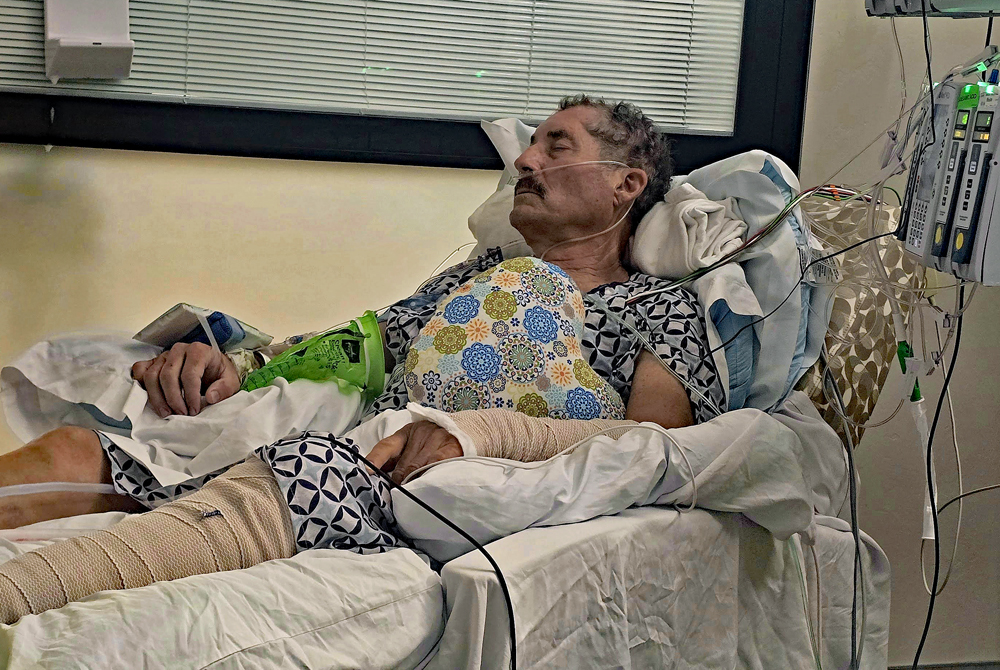
Sometime during the first year after I left that job, Ann called me. Her husband was in the hospital experiencing an acute hemolytic crisis. Ann believed it had been triggered by a medication her husband had been prescribed. The medical staff dismissed her concerns. Ann didn’t speak like an educated person, so they discounted her intelligence. Ann was experiencing the challenges of medical advocacy.
She was asking me whether I thought her concerns were valid. She knew that I trusted her instincts. I assured her that she quite possibly was on the right track. Lo and behold, the medical staff eventually came to the same conclusion.
That was my first lesson in medical advocacy. Well, in a reverse sort of way, maybe it was my second lesson.
My mother was a physical therapist. From my perspective, she subscribed to the theory that unless we kids were essentially eviscerated, we should suck it up and move on! She was a great mom, but when I developed a rare benign tumor in my left ring finger, she simply couldn’t acknowledge that it was a real issue. It took a great deal of effort on my end, as an 11-year-old, to convince her to get it diagnosed and treated.
I’m not really sure why. Was it part of her “suck it up” mentality, or was she concerned about having the medical community view her as a “pushy” mom? Thankfully, I’m not concerned about the medical community viewing me as a “pushy” mom. I’m a Mama Bear (or a Wifey Bear, as I will elaborate on shortly), and if I perceive that someone I love needs an advocate, look out!
My Pregnant and Anemic Daughter
 My daughter, Laura, had three very difficult pregnancies. She experienced hyperemesis gravidarum and struggled to get enough nutrition to sustain herself, much less a growing baby. She also became severely anemic.
For her last pregnancy, she had a new OB-GYN because she had moved to a different state. I accompanied her to her first appointment. I stated, “You will be monitoring her iron levels, as they were dangerously low during her previous two pregnancies. And she will be needing iron infusions.”
“We don’t typically draw blood to check iron levels in pregnant women.”
“That may be, but you will be doing that for Laura!”
With a peeved expression, she agreed to make a referral to a hematologist.
I was not present at the hematology appointment, but Laura told me that she received the same “we typically don’t do this” response from that doctor. However, after leaving the room and reviewing her test results, he burst back in and informed her that she would, indeed, be getting iron infusions. Go figure!
Laura would be the first to tell you that if you want good medical advocacy, call her mom!
The Events Leading up to Major Surgery
The impetus to write this blog post came as a result of my husband’s recent triple bypass surgery. That’s not to say there haven’t been many other opportunities for medical advocacy over the past year. In fact, our journey from last December to now is a perfect example of “the practice of medicine” and how critical it is to find the right people to make the right diagnosis.
Alan has been struggling with high blood pressure for more than 30 years. He’s been on a cocktail of blood pressure medications. They had some effect on his blood pressure, but it was difficult to achieve a lasting, consistent improvement.
He was admitted to the hospital last December with a blood pressure reading of over 200. As a result of his dangerously high blood pressure, he suffered a seizure while I was on the phone with him the morning he was expecting to be discharged. Another week in the hospital ensued, and it was discovered that he had sustained a compression fracture of his T11 vertebra, likely due to the violent thrashing associated with the unobserved seizure.
I think we received wonderful care that week, and I was in a position to assess it because I stayed in the room with him for the entire hospitalization. As a result of that medical crisis, we have added a plethora of specialists to our daily lives. Alan’s high blood pressure has impacted his kidney function, and it was the nephrologist who finally identified the underlying cause of his hypertension. He has secondary hypertension caused by excess hormone production related to his kidneys.
The cardiologist, who shares office space with our primary care physician, referred Alan for an angiogram to assess the impact that decades of high blood pressure had had on his heart. We were both shocked to learn that he had 70 to 80 percent blockage in his major coronary arteries. As a result, we found ourselves back in the hospital for another week, facing a major surgical procedure.
DVM versus MD
Before I describe what medical advocacy looked like during Alan’s week in the hospital, I need to add one caveat. Well, maybe two caveats.
First, I am a strong, opinionated, not-afraid-of-conflict woman, especially when I’m fighting for someone I love or a cause I deeply believe in. Strong, intelligent women are inherently intimidating to some people. Sadly, that is a lesson I’ve learned over and over throughout my life. For those of you who can relate, you go, girl! For those who struggle to speak up when speaking up is appropriate, you are a big part of why I am writing this blog. For the most part, I was never out of my comfort zone when asking tough questions.
The second caveat is that I come to the table not as an MD, but as a DVM. We used to say in vet school, “Oh, he (or she) is an RD (REAL doctor!).” That being said, physiology is physiology, regardless of whether you’re talking about people or animals.
Additionally, very few medical professionals of any kind are fond of “Dr. Google.” But I can do a Google search, interpret the information I find, and drill down into reliable sources. I’m not taking what I read hook, line, and sinker. I have the medical background to read between the lines and glean valuable information through the lens of experience and knowledge. Not everyone has that background. My friend Ann, whom I mentioned at the beginning, not only didn’t have the advantage of a medical background, but she also had to fight stereotypical attitudes that made judgments about her without cause.
Triple Bypass and Amiodarone
Alan’s bypass surgery was unquestionably the scariest medical event we have ever faced. I’d be lying if I said I wasn’t struggling to hold it together during those long hours in the waiting room, knowing they were stopping his heart and performing major reparative work. Alan’s sister was with me, thank heavens. For most of our almost nine years together, we’ve enjoyed a fairy-tale life.
Eventually, I was allowed into his room in the ICU. He came through the surgery beautifully. The operation took place on a Wednesday, and Thursday was quite a rough day. By Friday morning, he was definitely perkier, although he still looked like he’d been hit by a truck.
On Saturday afternoon, he had a bout of atrial fibrillation. Apparently, this occurs in about 75% of patients after bypass surgery. Nevertheless, Alan got out of the lounge chair and took a walk around the hallway. He was talkative and relatively alert. There was even some discussion about sending him home on Sunday instead of a day or two later! He experienced intermittent and brief bouts of atrial fibrillation.
On Sunday morning, they started an IV infusion of a drug called amiodarone to treat the atrial fibrillation. He tanked. He suffered from vertigo and horrible nausea, and he was unable to walk even a few steps without collapsing. I turned to Dr. Google—you can read for yourself what that AI conversation revealed.
I was convinced that amiodarone was the cause of his rapid and profound deterioration, but the doctors were far less convinced. I struggled to get the nursing staff to put him on scheduled anti-nausea medications rather than giving them “PRN,” or as needed. I had to get a bit edgy to get my message across. Still, I was unable to alter the duration of the IV medication, and it was discontinued as scheduled on Monday evening. Needless to say, there was no going home early.
By Tuesday morning, after 12 hours off that toxic drug, he was somewhat better. They discharged him on an oral form of the same medication, though they did reduce the dosage by half at my insistence. Here’s the thing: my research indicated that this drug has a half-life of 15 to 142 days—and its active metabolite has a half-life of 75 days! Because of this extraordinarily long half-life, side effects can linger for months after the drug is stopped. I wasn’t at all thrilled that they sent him home on an oral version of this nasty stuff, but they did.
A Second Hospitalization
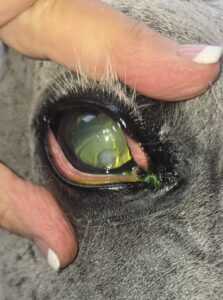 We arrived home on Tuesday afternoon. First, my sister-in-law drove me to a boarding stable a few miles from the hospital so I could retrieve our two horses, who had been staying there throughout Alan’s hospitalization. Ten days before Alan’s procedure was scheduled, my old gray gelding, Kadeen, had managed to develop a severe corneal ulcer. (This was not our first rodeo with eye problems.)
I tried my absolute best to get the eye under control before leaving Alan’s non-horsey sister with the responsibility of caring for all the animals. I wasn’t successful, so we ultimately hauled the horses to this stable, where a Tucson veterinarian treated Kadeen daily. It added a definite expense, but it brought immense relief.
After arriving home, I had the responsibility of caring for a one-week post-op husband and a horse who still had a severe corneal ulcer. We muddled along for a few days, mostly holding our own but not necessarily showing improvement. I was extremely stressed trying to treat my horse’s eye multiple times a day while doing all of my chores, taking over Alan’s, and caring for him as well.
Over the weekend, Alan deteriorated again. He suffered a resurgence of nausea and vertigo. He couldn’t eat anything, and he’d already lost weight that he couldn’t afford to lose.
That Sunday, the veterinarian who had treated Kadeen was scheduled to reevaluate his eye, so I hauled him an hour to the appointment. When it became obvious that we were still facing extensive, repetitive treatment, the vet offered the option of placing a stem cell lens on the eye. He noted that it was expensive, but very successful. When he said, “You won’t have to touch that eye for a week!” I was sold. At that point, convenience mattered far more than cost. The lens was placed, and his eye was sewn shut. I’ll write a blog about that process in the near future.
Things were so difficult for Alan that I took him to our local hospital on Monday. He was dehydrated (no surprise), so they transported him by ambulance to Tucson.
I had learned by this time that once you get a room, it takes a few hours for things to start falling into place. We didn’t receive much medical intervention Monday night beyond getting him rehydrated. We were assigned a shared room, which was quite interesting, to say the least. To state that our roommate lacked medical advocacy would be a huge understatement; many aspects of that man’s predicament were deeply unsettling.
Tuesday morning, the hospitalist visited us to take a history and ask a few questions. I asked something along the lines of, “What’s the plan?” Mostly, I was trying to gauge how long we were expected to stay, as I had five dogs at home unattended. I did manage to arrange for a friend to feed the dogs and horses on short notice, and while the dogs had a dog door, the setup was far from ideal. Thank heavens I didn’t have to treat Kadeen’s eye on top of it all.
The hospitalist seemed a bit frustrated by my questions. He responded that he couldn’t formulate a plan so quickly—which I completely understood, as he didn’t know the anxiety I was experiencing regarding animal care at home. Nevertheless, during our conversation that morning, I made it abundantly clear that I believed oral amiodarone was once again causing Alan’s severe nausea and vertigo. (Alan had not taken any amiodarone for about 24 hours at this point.) The hospitalist agreed that Alan would not receive any more in the hospital until we could figure out what was going on.
That Tuesday evening, we were thankfully moved to a private room. Not long after we settled in, a phlebotomist popped through the door. Since Alan’s daily CBC and chemistry panels were usually drawn in the middle of the night, I asked what test he was drawing for.
“Some hormone, I think. Starts with an ‘A.'”
“Amiodarone?” I inquired.
“That’s it!”
Finally, Someone Listened to Me!
The hospitalist had ordered the test to evaluate Alan’s blood level of amiodarone. Because it is a rarely requested test, the doctor wasn’t aware that the hospital lab would have to send it out, taking a week or more to get results. Nevertheless, on Wednesday morning, the hospitalist visited a much-improved Alan and informed us he was being discharged.
“What did you decide the problem was?” I inquired.
“Neurotoxicity due to amiodarone!” he responded.
Alan and I can’t remember whether it was right before his first discharge or after his second hospitalization, but at some point, his cardiologist—unwilling to admit that amiodarone had caused the issue—said, “You must have caught a virus or something.”
When I posted on Facebook about Alan’s ongoing struggles with recovery, I received multiple comments from people who had experience with amiodarone. One friend had worked for a cardiologist; another struggled with ongoing atrial fibrillation unrelated to surgery. Every single one of them said, “That is a NASTY drug!”
Alan also recently saw the dentist who had pulled a tooth right before his surgery. The dentist asked how he was doing post-bypass, and Alan replied that he was fine, other than the fact that the doctors had tried to kill him with a particular medication.
“Amiodarone?” the dentist asked. WOW!
Based on all my research and the comments I received, I had a question ready for Alan’s follow-up appointment with the cardiothoracic surgeon: Why prescribe a drug that causes so much havoc when there are multiple other medications to treat A-fib?
He did have an answer for me. He explained that amiodarone is the only drug that will pharmacologically convert A-fib to a normal sinus rhythm. However, once again, Dr. Google disagrees.
After the appointment, my husband laughed, noting that his “pushy wife” hadn’t made a very favorable impression on the doctor! At that point, the surgeon had dealt with my medical advocacy plenty of times!
What Are My Takeaways?
 It is absolutely not lost on me that I have a distinct advantage over many parents, spouses, children, and friends who find themselves having to advocate for a loved one. I have medical training, and I am not afraid of conflict.
As a veterinarian, I also have insight into how this dynamic plays out in my own field. I recently had a telehealth appointment for a dog showing signs of hip or back issues. The dog had seen his primary vet a mere three days earlier. Although the client mentioned concerns about the dog’s wobbliness, it didn’t seem to register with that veterinarian. Since the dog was scheduled for a dental procedure in a few days, I urged the client to insist on X-rays and a full evaluation while the dog was already anesthetized. I told him that if his vet refused to listen to his concerns, he should find a different vet.
Of course, there is a flip side to this. It can be a fine line between advocating appropriately and improperly challenging a health professional’s medical expertise. This goes back to my earlier point about the healthcare field not being fond of “Dr. Google.” There isn’t a manual for navigating this. While I was direct and confident in my questions and assertions, I was never rude. I didn’t make things up as I went along—I did my due diligence, applied my medical background, and asked targeted questions.
I admit I had a lot of processing to do after this experience. I’m not sure why I was surprised by some of the obstacles we encountered, but I was. I remember the egos from veterinary school, so I shouldn’t have been. A surgeon who opens people’s chests and operates on their hearts twice a day, four days a week, is bound to have a hefty measure of confidence. In fact, that’s exactly what you want when it’s your loved one’s chest being opened!
It’s not that I think we received poor care—on the contrary, our care was excellent. But it became abundantly clear to me that every patient needs an advocate. Someone has to be there to ensure medications are available, linens are changed, side effects are managed, and treatments are carried out. Hospital staff is busy, and your loved one is never the only patient.
Alan worries about what will happen if the roles are reversed and I am the one lying in the hospital bed. Will he know what to push for? I hope that if that time comes, I’ll be lucid enough to offer him guidance. Regardless, I have no doubt he will make things happen if he knows what needs to be done.
If your gut tells you your loved one isn’t getting what they need, advocate. If they dismiss you, make more noise. If your healthcare provider isn’t listening, find another one. Advocate appropriately, stay respectful, but never let the medical profession intimidate you. Everyone puts their pants on the same way!

You are absolutely the best advocate I’ve ever met. I wouldn’t want anyone else by my bedside but you!! When Lila was sick and I took her to the ER, other patients were seen before her that came in after her and didn’t seem as distressed. I REALLY wrestled with how much to push the registration staff about getting Lila in. I kept thinking, “What would my mom do?!” I know there are variables that I don’t understand that go into who gets a room first, so I was hesitant to cause conflict if I was ignorant of the situation, but I was also desperate to get Lila some relief. I did end up trying to expedite getting her into a room and she was taken back shortly after that.
It makes me sad that you had to go to bat for her but it makes me very proud that you did. There is a fine line, as I indicated in the post, but not in a million years could you ever be rude or disrespectful to anybody. So don’t ever doubt your ability to make things happen! It is for gentle, soft, conflict-avoidant, beautiful souls like you that I wrote this post.
That’s so sweet and helpful to hear you say that. I’ll keep that in mind the next time I’m in that situation!